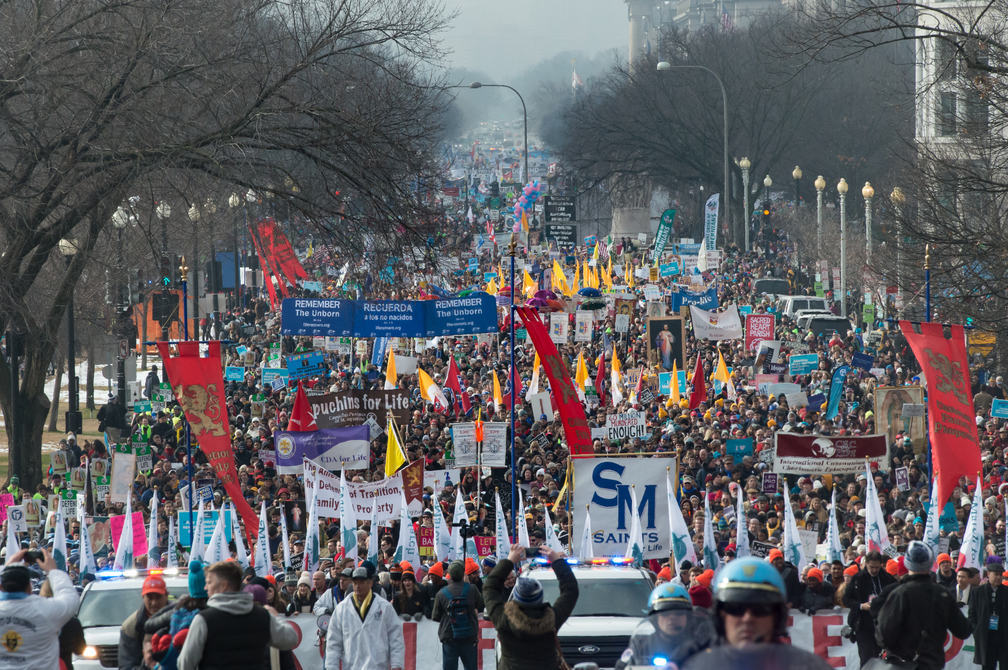
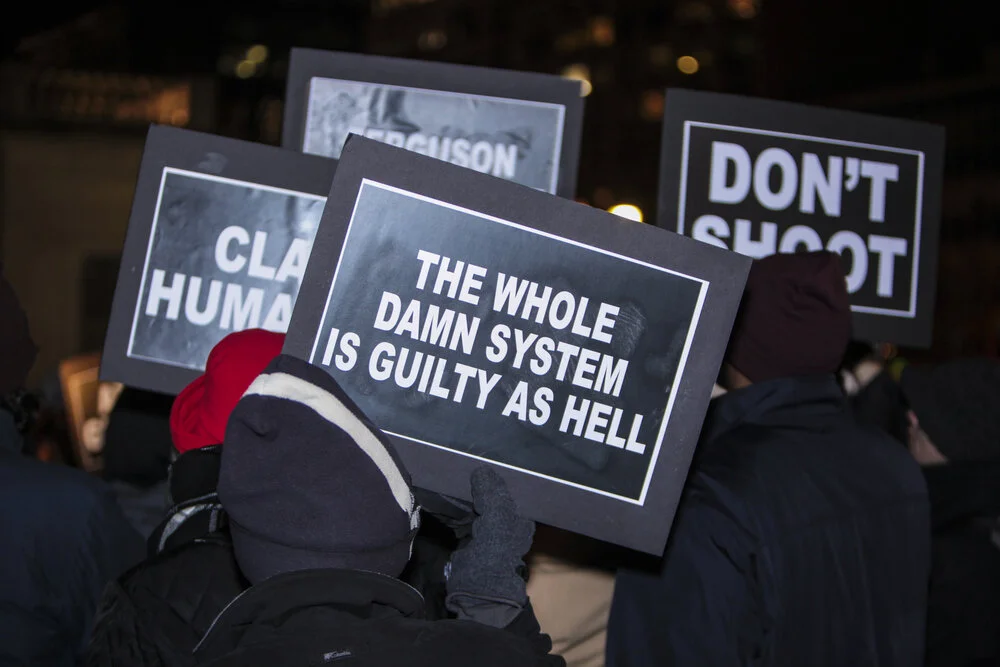
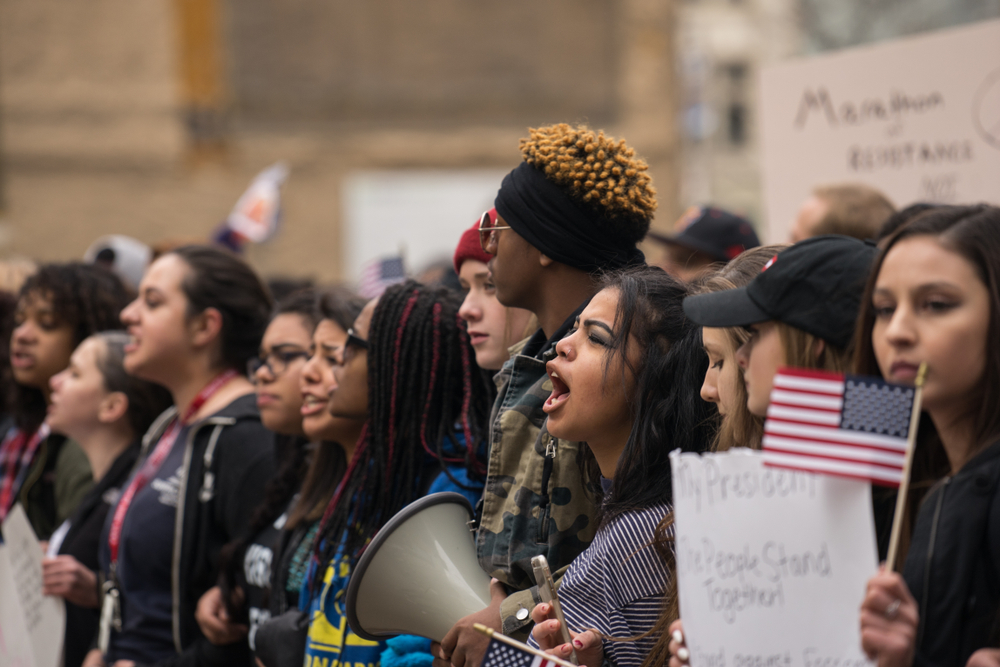
Last weekend, hundreds of protesters flocked to Boston’s Copley Square for a Rally to Stand Up for Science, myself included. There were a lot of clean-cut people in khakis, some wearing their academic regalia, others sporting lanyards from the AAAS annual meeting happening just down the street. And they made some very clever signs.
It was framed as a pro-science rally, but it was clearly a response to the Trump administration. Signs proclaimed “Science is not silent” and “So severe, even the nerds are here,” among other more explicitly political messages. Even the AAAS meeting itself held a packed session the day before, “Defending Science and Scientific Integrity in the Age of Trump,” reflecting something we’re seeing all over the country—scientists have had it with Donald Trump.
But one corner of the community—science philanthropy—has been mostly missing from the outcry. Only one large foundation predominantly supporting science that I’m aware of, the Simons Foundation, has released a statement opposing Trump’s policies, and a couple of other smaller funders have signed a joint statement from foundations.
As more researchers, institutions, and associations come out against the president’s broadly harmful agenda, it makes you wonder what it’s going to take to activate the big players in science philanthropy.
Not typically a very political bunch, researchers are becoming notably active and vocal in opposition to the administration’s cabinet appointments, like Rick Perry (DOE) and Scott Pruitt (EPA), and the president’s intention to withdraw from the Paris Climate Agreement. But the disastrous executive order that banned people from seven predominantly Muslim countries, pending undefined new rules for entry, sent many over the edge. The order directly impacted many scientists working or planning to work in the United States.
The response from scientific institutions was swift, including an open letter from close to 200 of the nation’s leading scientific, engineering and academic organizations that challenged the “profound implications for diplomatic, humanitarian, and national security interests, in part because of the negative impact on U.S. science and engineering capacity.” Several individual institutions like the Broad Institute and Rockefeller University released their own statements.
But we didn’t hear much from science funders until last week, when the Simons Foundation released the following:
As an organization dedicated to the advancement of scientific knowledge, the Simons Foundation stands united with the scientists and institutions we support in their opposition to the recently announced executive order on visas and immigration to the United States from seven Middle Eastern countries.
The world, and most notably our nation, has benefited greatly from the free flow of people and ideas across national borders, particularly in science, but more generally in all aspects of human endeavor. The executive order flies in the face of such productive interactions and is contrary to everything that makes America great.
I asked Jim and Marilyn Simons about the statement. “Well, we support a lot of scientists, and the scientific community is pretty up in arms about this,” Jim Simons said. He said he wished they had made the statement two weeks earlier, but it took them a while to make the decision. Ultimately, they put it to a small group of the foundation’s leaders, who all agreed. The response has been almost entirely positive, Simons said.
Marilyn Simons noted that they had been hearing from a number of scientists who were concerned about the issue, and the decision boiled down to “standing with our colleagues, and our grantees, and scientific institutions, understanding that we have some terrific scientists in our country, and people come from all different backgrounds. I think it was just having to take the stand and support what we think is right and consistent with our American values.”
As we’ve pointed out, foundations in general were slow to respond, but many have since come around to taking a stand against Trump’s policies, most prominently with a joint statement coordinated by Grantmakers Concerned for Immigrants and Refugees (GCIR) that’s now been signed by more than 150 foundations and 20 supporting organizations.
The signatories do not include major U.S. science funders like HHMI and the Moore, Sloan, Kavli, Packard, or Keck foundations, none of which have released their own statements in opposition to Trump’s policies, either. Biomedical funder Gates has mostly stayed out of it, too, although Bill and Melinda did express concerns about the reimposition of the global gag rule.
Signatories do include the Vilcek Foundation, which celebrates arts and science contributions from immigrants (Read Jan and Marica Vilcek’s statement on the executive order here), and the Heising-Simons Foundation—co-founded by Jim Simons’s daughter, Liz—which funds a mix of science research, climate and energy, human rights, and education work.
Related:
- A Timely Recognition of Immigrants’ Contributions to American Arts and Sciences
- Inside the Heising-Simons Foundation: A Brainy Startup Finds its Way in 3 Major Arenas
- Gag Reflex: Melinda Gates Isn’t the Only Funder Worried About the Mexico City Policy
Deanna Gomby, CEO and president of Heising-Simons, shared the following statement with Inside Philanthropy when we asked about why they signed on:
Core to our values as a foundation is the idea that immigrants are integral to our society. They are our neighbors, our friends, and our family members. The foundation’s Human Rights program is rooted in our belief in the inherent dignity of all people.
Thus, we joined the list of the foundations signing the GCIR letter because we are not only aware of immigrants’ important contributions to all aspects of our society, but, equally important, of their inherent rights as individuals. That said, we stand with the scientific community in its response and concern about the repercussions of this ban, and how it might impede scientific progress. We are always prepared to speak out when we see an injustice. This happens to be a case that touches many of our programs, much of our work, and all of our values.
We’ve written before about understandable reasons foundations have been hesitant to speak out against the disaster of the Trump administration, even just one month in (read full coverage here). There’s a certain legitimate fear of being targeted by the federal government. Foundations also tend to shy away from controversy in their desire to stay neutral or “above the fray.” Additionally, many prefer to stay in the background and let their grantees do the talking.
There are also unique concerns facing science funders. Not everyone is on board with scientists engaging politically, with some fearing that matters of scientific consensus, such as the threat of climate change or safety of vaccinations, will be further undermined amid partisan conflict. Or that protesting the administration will harm the standing of academics as “objective seekers of truth.” There’s a long-running debate about where the invisible line lies between scientists and activists.
It’s also worth noting that some science funders that have remained silent on the Trump administration do engage in policy in their own ways. Moore, for example, funds a Science & Technology Policy Fellowship program through AAAS, which allows scientists and engineers to contribute to federal policy. So you can understand why science funders might want to continue playing the role they’ve historically played.
Then again, as demonstrated by researchers picking up protest signs, issuing condemnations, and even running for office, things have changed—in a few ways.
For one, I would argue that the actions of the Trump administration on immigration alone have simply proven malevolent beyond a reasonable, neutral person’s view of what’s acceptable. And it’s only going to get worse. The most egregious act, the infamous executive order, was blocked in court, but we can expect to see a retooled version any day now. Other draconian immigration policies are in place, and more are surely on the way.
As the situation worsens, and many would say we’ve blown way past this already, there will be an inevitable point when it becomes a non-option to “stay out of politics.” Fact is, the Trump administration is harming people, and many of those harmed are in the research community.
Then there’s the fact that the administration is incompetent and its policies flawed. One of the scientists’ arguments against the immigration order is simply that it will negatively impact science in the U.S. In other words, even setting values aside, this creates bad outcomes.
On yet another level—and judging from the signs at the Copley Square rally alone, this is a huge concern—there’s a sense that Trumpism is a threat to the very concept of empirical evidence. That the president’s disdain for the truth, his embrace of conspiracy theories concocted on cable news and dark corners of the Internet, his climate denial, even anti-vaccine sentiments (which often show up on the far left, t00) reveal one underlying value held dear by Trump—an utter contempt for facts.
And that’s something that any scientist can and should be a partisan against.
I get why science funders would resist getting involved in these issues. It’s way outside of their usual roles, and their credibility is on the line. But there’s far more on the line than that, and funders can lend a clear-eyed, authoritative voice in opposition to what’s happening. Just as their grantees and colleagues have, let’s hope more in the science philanthropy community will stand up.