During the month following hurricanes Irma and Maria in 2017, the Puerto Rico Community Foundation was responding to between 10 and 15 walk-ins every day—individuals and nonprofits acting as de facto first responders to their communities. Their requests included basic short-term recovery needs such as equipment for cleanup, food, water purifiers and gas-powered generators.
Before long, just as the storms would change the lives of everyone in Puerto Rico, the foundation began to evolve. The team at FCPR (Fundación Comunitaria de Puerto Rico) soon began learning more about energy and water systems, and began funding sustainable, community-controlled infrastructure projects.
“We do believe that we need to work as a community foundation with the most vulnerable communities to make them more resilient and in a more sustainable way,” says Mary Ann Gabino, senior vice president of the foundation. “It’s not just to work on the immediate, [remedial] side, but to really work in a participatory manner to give them sustainable resources in the future.”
Made possible in part by a surge of philanthropic support for the U.S. territory after the 2017 storms, the foundation has become a champion for equitable rebuilding and making infrastructure on the island more resilient. That includes helping to establish solar communities with their own renewable energy microgrids, adding solar infrastructure to dozens of health clinics, and improving aqueducts to provide clean water to individual communities.
Ultimately, the foundation has a vision to build on the work that’s happened so far and create a Puerto Rico Green Energy Corridor, where rural and remote communities will have control over their own reliable energy systems that they hope will revitalize economically disadvantaged parts of the island.
Puerto Rico is still a long way from fully recovering from the hurricanes (thousands of damaged homes are still under blue tarps), and is weathering ongoing fiscal and governmental crises. But the island is also providing impressive examples of resilient disaster recovery in an era of worsening climate impacts and the role foundations and local nonprofits can play.
More Resilient Systems
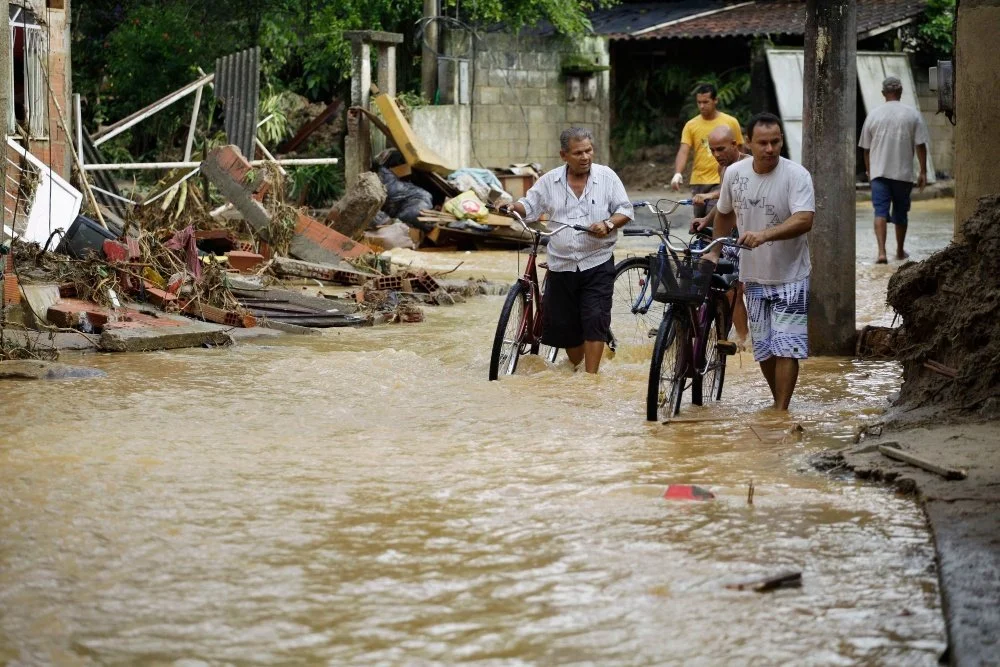
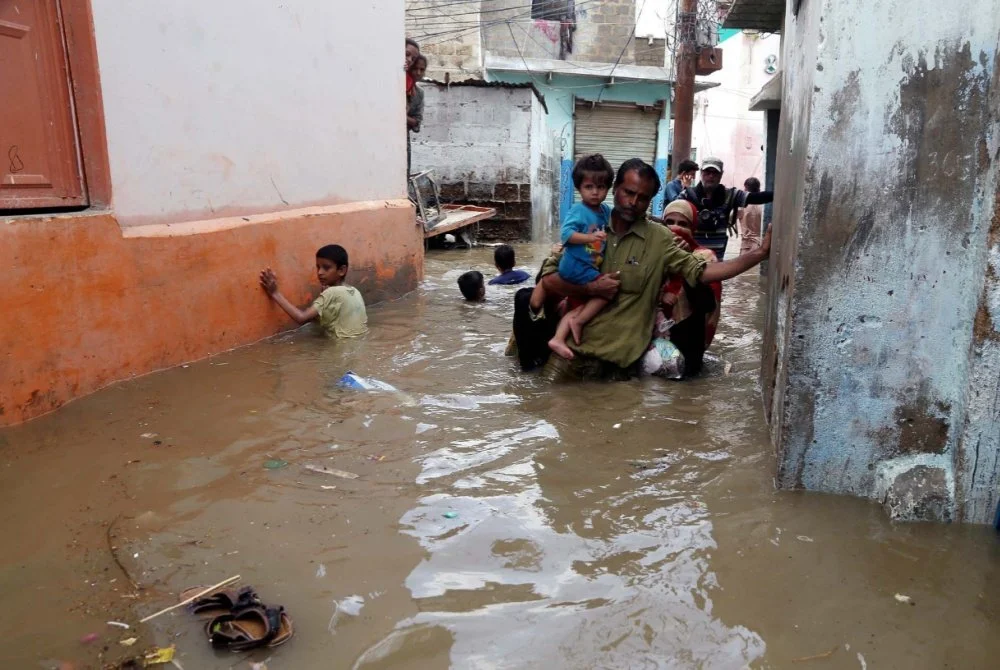
Back-to-back hurricanes Irma and Maria devastated Puerto Rico, with the official death toll from Maria estimated at 2,975 people, and thousands more are displaced. The historic storm hit an island community already suffering from a high poverty rate, neglect from the mainland United States, and aging infrastructure. It took nearly a year to restore power to the island following the largest blackout in U.S. history.
After the disasters, Puerto Rico experienced an influx of about $400 million in philanthropy, over 60 times what it typically received, with previous annual support for the territory at just $6 million, according to one report. While several new funds were established outside of the island, FCPR was among a group of local foundations and nonprofits whose roles grew significantly in the storms’ aftermath.
FCPR operates like most community foundations in that it houses about 100 donor-advised funds, has endowed funds that make grants, and runs its own programmatic initiatives. Before the storms, it was making about $2 million in grants a year from a variety of funding sources, including donors inside and outside Puerto Rico, other foundations, and federal grants. Since the hurricanes, it has received about $13 million in response, including from other foundations and crowdfunding. Community foundations from around the United States, in particular, rallied to move money into FCPR, making up almost half of that influx.
A major focus for the foundation is equity, and the turmoil following the hurricanes underscored huge gaps in economic stability and vulnerability on the island. Puerto Rico’s energy and water systems are very centralized, and remote and rural areas often lack equal access to services and are highly vulnerable during natural disasters. The foundation created a strategy to target those gaps, seeking to empower communities with their own sustainable infrastructure.
When it came to water infrastructure, one of the community nonprofits that approached the foundation for recovery needs came from the city of Yauco, which was hit hard by landslides. In addition to materials and supplies, they had an unexpected ask—to build a well.
“We froze. We said, what, a water well?” Gabino says, knowing little about building water infrastructure at the time. They had never done such a project, but made a grant to dig the well, and began exploring similar potential in other locations. The team brought in experts on water systems, and began collaborating with nonprofits (including Oxfam and Hispanic Federation) to support communities not connected to the central water system, upgrading their own often aging local aqueducts. The foundation has now worked on 30 community-owned aqueducts, updating the infrastructure and adding solar power.
Solar Communities
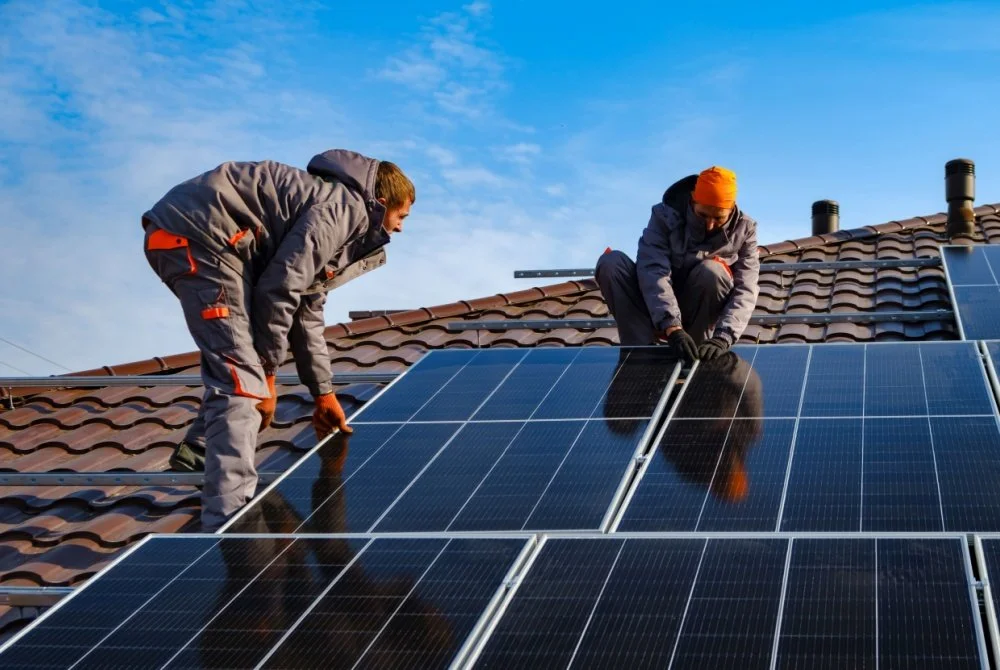
The foundation’s renewable energy work followed a similar evolution. The initial phase targeted nonprofit community health clinics, which are often the only places to get medical help during disasters, and are generally critical for remote communities. The foundation has now supported installation of solar panels and batteries at 37 such health clinics, about half of them in Puerto Rico.
A big step up in FCPR’s energy work was in Toro Negro, a rural community in a mountainous region of Puerto Rico. Working closely with locals and the nonprofit Somos Solar, the foundation helped develop solar microgrids that now supply energy to 28 residences. Toro Negro formed a community nonprofit that owns and operates the new infrastructure.
The foundation has also funded a second solar community called Esperanza Village, a nine-residence health center that’s home to a senior population. By this time, Gabino says, they had learned some important lessons, including performing an audit of energy consumption before setting up a microgrid, to improve efficiency.
Now the foundation is working with Culebra, a small island municipality off Puerto Rico’s eastern coast. Culebra, which, along with Vieques, drew power from the main island, was running on generators for an incredible 18 months after the hurricane cut off its connection. The foundation received a $4 million federal grant to work with the island, and is currently in the design phase, with a goal of transitioning to 100 percent renewable energy.
Learning Curve
While FCPR has stepped up its energy work, climate change has been on the foundation’s radar for many years, Gabino says. FCPR recently held a board retreat focused on the topic, although after massive summer protests erupted, leading the governor to step down, it almost changed the agenda.
“We… said, no, we can’t. Because this is what’s happening to climate change. Everything that comes up puts the climate change topic aside because the other thing is more important,” Gabino said. They discussed the political upheaval, but maintained the focus on climate change for the bulk of the meetings.
Earlier this year, foundation CEO Nelson Colon also testified before Congress, proposing more renewable energy cooperatives owned and managed by residents to serve low-income communities. He described an ambitious goal of creating a corridor of such cooperatives serving the island’s central mountain range that could serve as a model for other geographies.
A major challenge, of course, is to secure continued funding. As with most disaster funding, attention tends to drop off after initial recovery efforts. But FCPR’s team continues building on its work, learning along the way, and Gabino encourages other funders to do the same.
“The world is moving, and everybody’s just doing their little piece. And if we all do our little piece, we come up with a greater impact,” she says. “It’s good to start small. We don’t have to think of accomplishing these huge, great goals, and that it has to be perfect the first time. It’s just starting small, just taking a small step.”