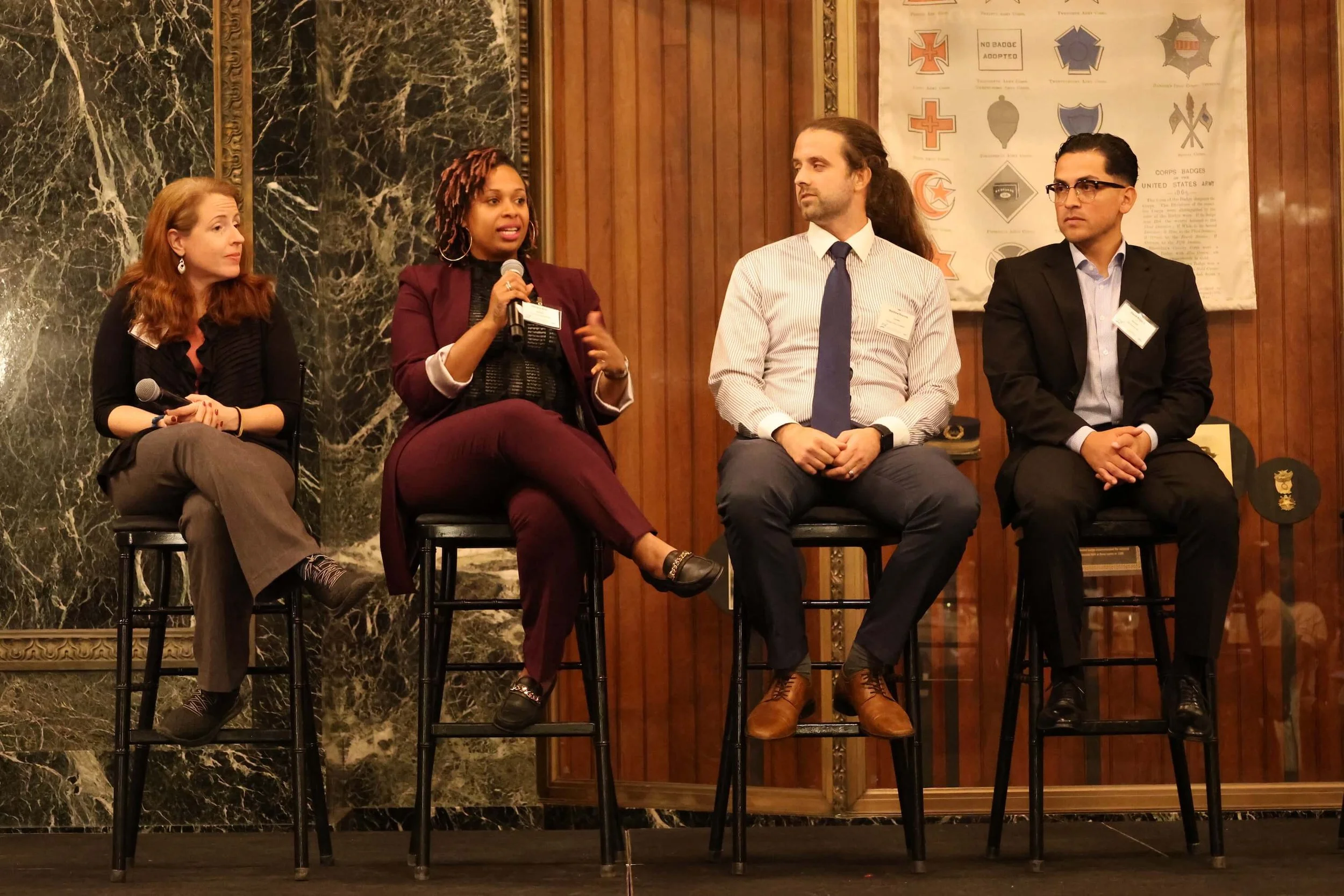
In the 10 years since the DC Public Education Fund started, it’s raised more than just millions in philanthropic donations. It’s raised some big questions about the secret to its success, the efficacy of its methods, and the role private money should play in public systems.
Since its start, the DC Ed Fund has raised $120 million in support of the DCPS with investments from a deep roster of established education philanthropists. Back in 2010, that translated into an extra $705 spent per student in philanthropic dollars, which far outstripped philanthropic investment in other districts, according to the Washington Post.
During the same period, students in D.C. public schools and their students have seen big improvements. In 2014, then Secretary of Education Arne Duncan called D.C. “by every measure the fastest-improving big city school district in the nation.” Rising NAEP and PARCC scores back up Duncan’s claim.
With the improvements, DCPS and its reforms—and by extension, the DC Ed Fund—have gained popularity among funders, the local press and the public, but that was not always the case.
Rallying Private Money
The fund started back in 2007, the same year that DCPS was placed under mayoral control and Michelle Rhee assumed the new school chancellor position. When Rhee arrived, the district’s budget was already finalized and public resources spoken for. To enact the reforms quickly, Rhee decided she would need to raise private funds, she said recently at an event honoring the fund’s 10th anniversary.
The challenge was that DCPS had squandered its credibility with funders. “Pre-Michelle, it’s actually hard to overstate the level of dysfunction people perceived in the DCPS system. The stories are really legend—teachers not showing up, supplies not there, schools not able to open on time,” said Katherine Bradley, the founding chair of CityBridge Education, a nonprofit focused on D.C. public schools.
At the time, Bradley conducted hundreds of interviews asking businesses and philanthropies whether they would consider giving to DCPS. Few were interested. “There was tremendous dissatisfaction from people giving up on the idea that this could ever be a high-functioning system,” she said.
“I certainly think that from the philanthropic standpoint, people weren’t ready to start writing checks into the black hole of DCPS without knowing what might happen,” Rhee said. She thought a separate, independent organization that would receive and manage donations would soothe philanthropists’ apprehensions.
The result was the DC Ed Fund. Early on, organizers put a lot of effort into establishing the fund as an entity that worked closely with DCPS, but was independent and could hold the district accountable, said Cate Swinburn, the fund’s first executive director. This allowed the fund the credibility it needed to raise money from donors wary of DCPS’ track record.
Rhee’s big idea was to invest in what she called “human capital,” which came in the form of a new teacher evaluation system tied to student achievement, called IMPACT, and bonuses for the highest-performing teachers. Implementing IMPACT and financing teacher bonuses were expensive. Rhee used private money from the Ed Fund to pay for it.
Where Did the Money Go?
Just how expensive was it? It’s difficult to nail down the exact total. According to tax forms filed by the DC Ed Fund, $53.1 million went to human capital projects from fiscal 2009 to fiscal 2012. Other line items were listed under human capital, so not all the money went to IMPACT. For example, we know about $21.7 million of that went to teacher bonuses during that time period, according to reports published by the fund.
That this was private rather than public money mattered, because these reforms were initially very unpopular with teachers and the public. Hundreds of teachers lost their jobs under the new evaluation system. George Parker, the teachers’ union president who negotiated the contract implementing IMPACT, was voted out. Rhee’s boss, Mayor Adrian Fenty, was ousted during his party’s primary, and Rhee resigned shortly after.
While the reforms were unpopular with the public, they likely played a big part in what drew philanthropists to the fund and DCPS, said Sarah Reckhow, an associate professor at Michigan State University and author of Follow the Money: How Foundation Dollars Change Public School Politics. The Ed Fund started when a lot of philanthropists were interested in funding teacher evaluation reforms, Reckhow said.
While teacher evaluation reform may have attracted funders initially, the widely publicized improvements keep philanthropic funds flowing into the Ed Fund and DCPS, even as funders move on to other projects. “People want to be on the winning team,” said Kaya Henderson, the former chancellor who took over after Rhee’s departure.
In recent years, Bloomberg Philanthropies became a big donor to the fund. An advisor to the foundation said DCPS’s combination of governance, leadership and track record drew the organization’s attention. D.C. is one of the few cities Bloomberg Philanthropies has bet on, said Jon Schnur, executive chairman of America Achieves, which advises Bloomberg Philanthropies.
After IMPACT, the fund supported a range of projects, including curriculum reform, study abroad opportunities, and the opening of the Ron Brown College Preparatory High School, an all-boys school for young men of color.
A Who’s Who of Funders
Bloomberg Philanthropies isn’t the district’s only big backer. Over the past 10 years, the list has included the Bill and Melinda Gates Foundation, the Catherine B. Reynolds Foundation, the Charles and Lynn Schusterman Family Foundation, the CityBridge Foundation, the Eli and Edythe Broad Foundation, the Laura and John Arnold Foundation, the Michael and Susan Dell Foundation, the Robertson Foundation and the Walton Family Foundation, among others. The fund has also received big corporate gifts from Google, Marriott and Target.
Henderson is aware of the optics of private money driving reform in public schools. “There is a very big public concern about who’s pulling the strings on public education,” Henderson said, speaking at the same event as Rhee earlier this month. “I think the public wants to know that public schools are public and not being controlled by a triumvirate of the richest white dudes in America.”
Henderson thinks the Ed Fund has a role to play in guaranteeing to the public that it’s the district driving the reform agenda, not the funders. In practice, that means the Ed Fund collaborates closely with the school system to figure out which projects need funding. The fund then shops those projects around to potential donors to see which ones are interested in backing them. After a pilot period, the district agrees either to drop the program or find public money to fund the project going forward.
Too often in the history of education, philanthropists drove the agenda instead of the district, Henderson said. “I think that shift in power was really important for districts, and really, really important for the public,” she said. “In a time when there are big questions around the role of public education in society, it is incumbent on ed funds and districts to guarantee to people that these philanthropies are not driving the agenda.”
Assessing Impact
DCPS and Ed Fund officials are quick to point to the improvement in students’ scores as proof of their reform success, but there’s more to the story. There are other factors that could have contributed to the district’s improvement. For one, the city has seen huge amount of gentrification in the past 10 years. Academics complain that the school district has not been forthcoming with data that would allow them to evaluate IMPACT conclusively, the American Prospect reported.
Advocates for the fund and DCPS like point to the fact that scores have improved across neighborhoods and demographics. However, achievement gaps persist between racial, ethnic and socio-economic groups, and in some cases have increased, a 2015 study from the National Research Council found.
In defense of DCPS and the Ed Fund, they seem aware of this criticism and champion projects to fix it. For example, the Ron Brown College Preparatory High School that opened this fall is meant to close the achievement gap for young men of color.
There’s also work that supports IMPACT’s success narrative. In 2013, Thomas Dee, a professor of education at Stanford University, and James Wyckoff, an education policy professor at the University of Virginia, evaluated IMPACT with positive results. They looked at what happened to students when an ineffective teacher was replaced by a more effective teacher. They found that students performed better when a good teacher replaced a bad teacher, despite the inconstancies the turnover might cause.
But beyond that, there haven’t been many independent studies that conclusively say IMPACT and the other DC Ed Fund reforms caused the improvement in student scores. There simply isn’t enough data from DCPS to draw that conclusion. Authors of the 2015 achievement gap study recommended the district council empower an independent body to collect DCPS data and evaluate its performance, similar to the Congressional Budget Office. That was back in 2015. So far, no such body exists.
This is important. Reforms are pushed through with private money, which to a degree insulates them from public opinion. Removed from the immediate pressure of public opinion, what is there to hold the system accountable?
Related:
- Becoming a Money Magnet: The Lessons of the D.C. Ed Philanthropy Boom
- Meet Yet One More Big Corporation That’s Giving for STEM Education
- When It Comes to Employing More Teachers of Color, Some Funders Are On the Right Track