This August, 45 people died from 249 incidents of gun violence in Chicago, according to reporting by DNAinfo. Those are tragic numbers, but they actually represent a drop in violence from last summer, when 369 August shootings claimed the lives of 79 people. In 2016, the city experienced a major spike in gun homicide, prompting a sense of crisis and the question from community activists: Is Chicago philanthropy doing enough?
Faced with that question from a local community leader, the MacArthur Foundation pointed to the billion dollars it’s invested in its home city since 1979. But it also quickly joined a group of Chicago’s top funders to roll out the Chicago Fund for Safe and Peaceful Communities in advance of Labor Day weekend, a time when shootings often soar. Emergency grants went out to 70 local groups that offered ideas for countering violence.
Related: With Violent Crime Spiking in Some Cities, Can Philanthropy Make Any Difference?
While the new fund was set up as summer wound down last year, the rapid response effort hit full stride this spring, with a grants cycle that started pulling in proposals by April and issued checks to community groups before the school year ended and the dangerous hot days of summer began. The fund cast a wide net with its support, this time providing grants to 120 groups in over 17 Chicago neighborhoods. It also organized events around the city, promoted with the Twitter hashtag #safestsummerever2017.
Beyond MacArthur, a who’s who of Chicago grantmakers have bankrolled the fund, including the Chicago Community Trust, the Joyce Foundation, the Field Foundation, the Polk Bros. Foundation, the Woods Fund, and the McCormick Foundation. All these foundations are part of the larger Partnership for Safe and Peaceful Communities, which was also created in 2016, and describes itself as a coalition of more than 30 local funders “committed to aligning their funding to support proven and promising approaches to reducing violence.”
MacArthur’s grants for anti-violence work have gone well beyond contributing to the emergency grants fund. In July, it announced $3 million in funding to reduce gun violence, including a big grant to support “programs operated by local direct service organizations to intervene with potential victims and shooters through a variety of approaches, including street outreach and violence interruption, connection to support services, and jobs.” And it put up funds to support academic research on reducing violence in Chicago. Also in July, MacArthur announced a set of multi-year grants to local nonprofits, which it described as “Community Capital Grants.” These grants reflected the foundation’s new strategy for Chicago, which puts a focus on investing in “civic and community infrastructure by supporting strong organizations to fuel innovation, build capacity, and pursue opportunities for growth.”
As we’ve reported often, funders everywhere are being pushed to provide more general support to build overall nonprofit capacity. The Chicago Community Trust shifted its strategy in this regard a while ago, and it’s interesting to see MacArthur go down the same path—a shift it says it made after listening to a diverse array of individuals and organizations in the city. The foundation has stressed that it sees a stronger social sector as critical both for reducing violence and expanding economic opportunity—goals that many believe must be pursued together in Chicago, with unemployment rates in poor neighborhoods well into the double digits.
The view that violence and hopelessness are deeply entwined is at the heart of another initiative unfolding in Chicago right now, Chicago CRED, which is led by former U.S. Education Secretary Arne Duncan and bankrolled by the Emerson Collective, the philanthropy of Laurene Powell Jobs. The collective says this project operates on the “core belief that jobs can stop bullets. When young men have a chance in the real economy and are encouraged to follow their drive, they’ll flourish. They’ll turn street skills into career credentials.”
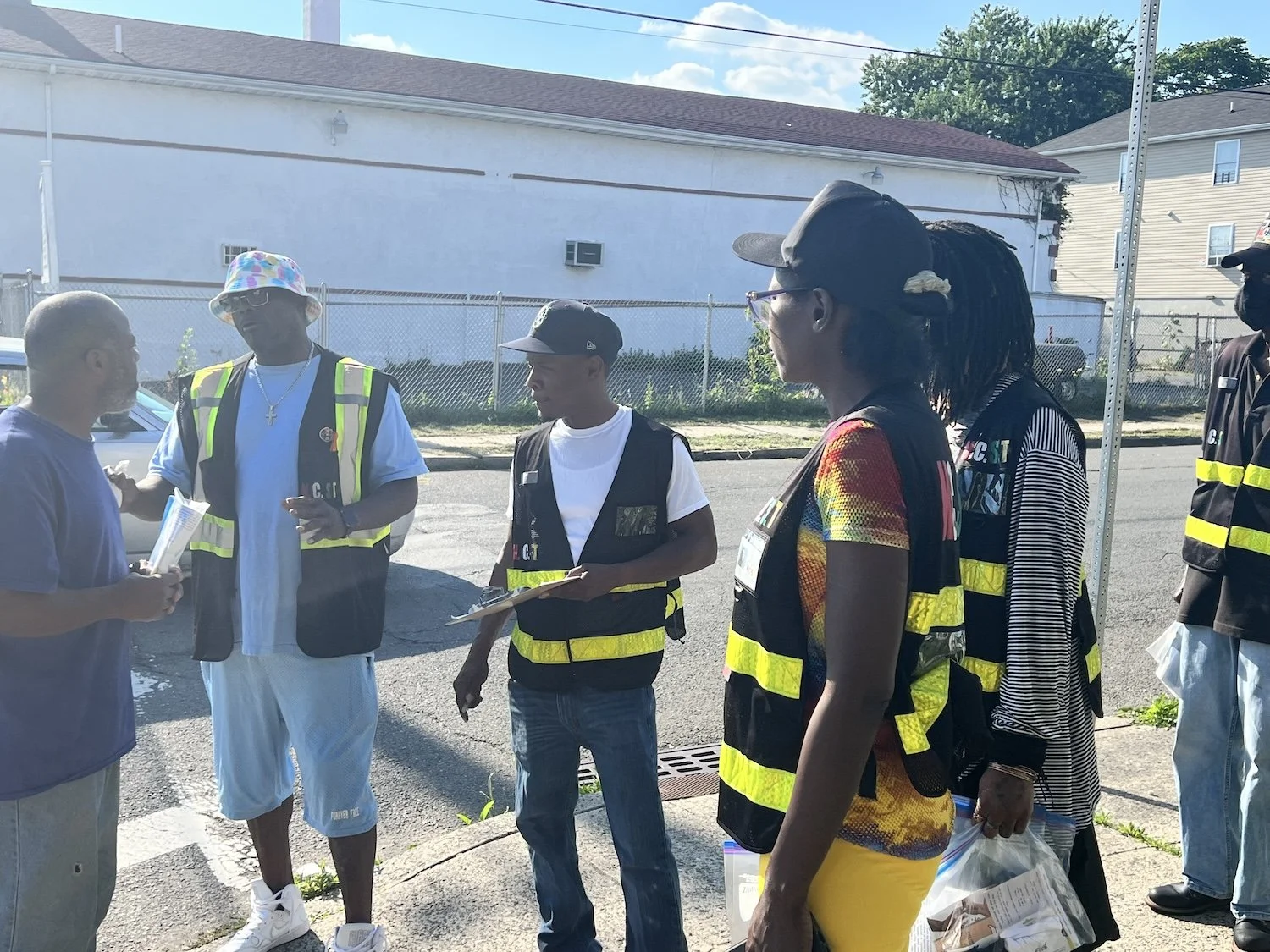
Last year, CRED launched a pilot program on the South Side that enabled 28 young men to get job training and placement in transitional jobs doing restoration projects in their neighborhoods. CRED is also providing participants, many of whom have experienced trauma, with counseling and coaching to work out their issues and develop plans for their lives.
Details are scarce on what kind of grant money or for-private investments are flowing through CRED or what the ultimate scale of this project might be. But the effort is sure to benefit from the combination of Duncan’s connections and Powell Jobs’ deep pockets.
Related: Making Peace: New Grant Dollars Flow to Stem Urban Violence
Meanwhile, the Partnership for Safe and Peaceful Communities recently offered more details about its plans going forward. Between them, the coalition’s members have now committed to investing $30 million. During the next two to three years, the partnership hopes to “help strengthen programs and lay the foundation for a meaningful reduction in gun violence.”
The partnership is focusing its attention on four related areas: (1) direct intervention with “likely victims and perpetrators,” (2) strengthening Chicago-area gun laws to reduce illegal firearm availability, (3) supporting grassroots organizations and anti-violence programming (in part through the Chicago Fund for Safe and Peaceful Communities), and (4) increasing the legitimacy and effectiveness of the Chicago Police Department through community-minded reforms.
Both the partnership and the fund may be quite new, but as we’ve reported, funders concerned about gun violence have been gaining new momentum and refining their strategies lately. There’s new energy emerging around gun violence prevention as a realistic goal for philanthropy, despite a deadlocked national debate on guns themselves. A key nexus of this work is the Fund for a Safer Future (FSF), a growing collaborative of 14 grantmakers. The Joyce Foundation, a longtime leader on this issue, is a member of FSF as well as Chicago’s funder partnership.
Related: Ending the Standoff: Who’s Trying To Change the Conversation on Guns?
Quite apart from rising homicide rates in some cities, negative community-police interactions and new attention to racial equity issues have elevated the issue of gun violence in recent years. Funders are keen to harness those conversations in a positive way to find intersectional paths forward. The Chicago partnership’s four strategies reflect that nuance.
Another initiative unfolding in this space is the Peacemaker Partnership, a collaborative project empowering local gun violence prevention. As we reported this summer, the MacArthur Foundation is a supporter, as well as funders like Kellogg and Google.org, along with the less well-known William R. Kenan, Jr. Charitable Trust, which recently invested $5 million in Louisville and Lexington, Kentucky to support work with young black men touched by community violence.
Taken together, these efforts—along with Michael Bloomberg’s well-funded initiative, Everytown for Gun Safety—represent the biggest philanthropic pushback against guns and violence in recent memory, if not ever. It’s a hopeful moment. But it will be a while before we’re able to say whether funders are really making progress against one of the toughest challenges in America right now.
Related: A Low-Profile Funder Gives New Attention to Race and Community Violence