• Skip to main content
  • Skip to secondary menu
  • Skip to primary sidebar
  • Skip to footer
Inside Philanthropy

Inside Philanthropy

Go beyond 990s.

Facebook LinkedIn X
  • Grant Finder
  • For Donors
  • Learn
    • Explainers
    • State of American Philanthropy
  • Articles
    • Arts and Culture
    • Civic
    • Economy
    • Education
    • Environment
    • Global
    • Health
    • Science
    • Social Justice
  • Places
  • Jobs
  • Search Our Site

A Research Funder Knocks on the NIH’s Door Looking for Ideas—And Big Grants Flow

Tate Williams | January 11, 2018

Share on Facebook Share on LinkedIn Share on X Share via Email
Banner for article A Research Funder Knocks on the NIH's Door Looking for Ideas—And Big Grants Flow
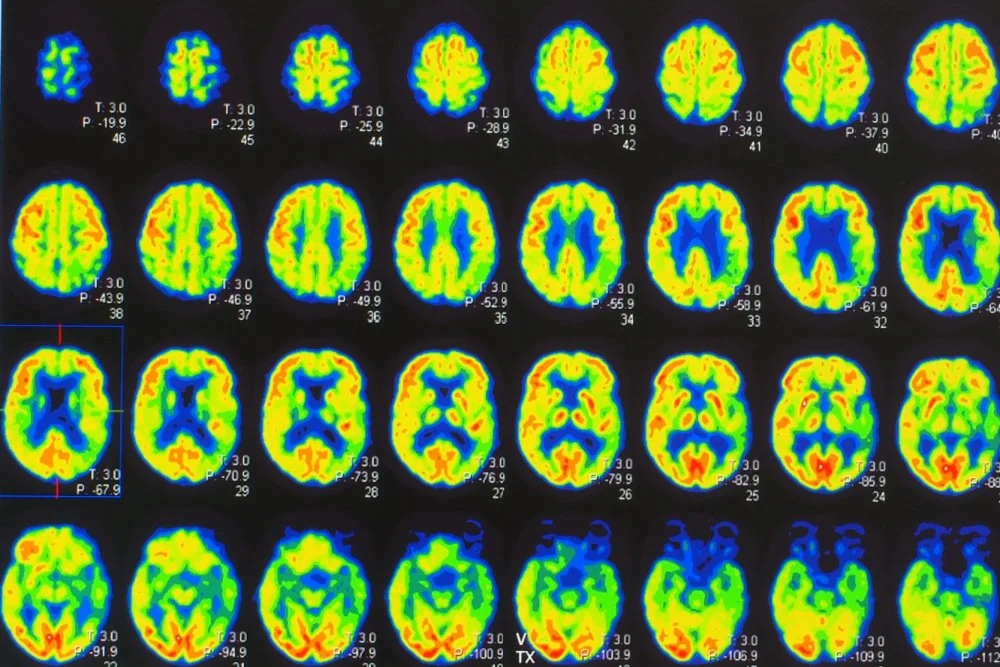
photo:  angellodeco/shutterstock

One challenge in science philanthropy is finding the right niche where a grantmaker can really make an impact. Research is complex and expensive, after all, and even the wealthiest donors are working with a lot less money than corporate or government funding sources.

The Open Philanthropy Project—a funding outfit anchored by the wealth of Dustin Moskovitz and Cari Tuna—has been facing that very challenge, and over the past year, it ran quite a unique RFP to track down some high-risk, high-reward research to fund. 

In short, it asked the NIH for projects it had to turn away, and ended up making nearly $11 million in grants to a handful of the applicants. It was more elaborate than that, of course, considering we’re talking about OPP, one of philanthropy’s most methodical funders. 

The project, which officially became an independent organization last year, has identified science research as one of its four main categories of giving, due to the field’s potential for transformative breakthroughs and the opportunity to back risky projects other sectors won’t. The organization has been feeling out giving in the category and making some sizable grants, but has yet to pin down focus areas within it.

In late 2016, the the team looked to a grantmaking program run by the National Institutes of Health called the NIH Director’s Transformative Research Award (makes sense). It’s an open call for proposals that has no budget limit and no requirement for preliminary data. So it’s meant to be edgier than conventional government grants, which tend be on the safer side—limited in size and requiring strong evidence of viability. 

But the government agency only funds eight to 12 of the proposals out of up to 300 it receives per year. So OPP figured it would ask the NIH about those that didn’t make the cut. Specifically, the NIH directly invited those it could not fund to resubmit their proposals to the Open Philanthropy Project, along with reviewer notes they received back from the agency. 

This resulted in $10.8 million across four grants over the course of 2017. The largest recipient was an Arizona State researcher who received $6.4 million to test out a cancer vaccine on pet dogs. Just over $2 million went to a University of Notre Dame scientist to develop a new tool for sequencing protein molecules. A grant to Rockefeller University for $1.5 million will explore a mechanism in viruses (relevant to OPP’s interest in pandemics and biosecurity). And an $825,000 grant to UC San Francisco will support research on a stem cell treatment for regenerating human livers.

If this sounds like a unique approach to science philanthropy, it is. But it’s this kind of curiosity in action we’ve come to expect from the Open Philanthropy Project. The outfit started as a partnership between Moskovitz and Tuna’s foundation Good Ventures, and effective, altruism-influenced charity evaluator GiveWell. OPP is now an independent LLC that advises on grants funded mostly by the couple, but some additional donors as well. 

Moskovitz, a co-founder of Facebook, is worth almost $15 billion, and the couple signed the Giving Pledge, so OPP has potential to become a real powerhouse in Silicon Valley philanthropy.

The organizatio has a rare zeal for efficiency and bang-for-the-buck, as well as transparency, as it exhaustively documents its activities through blog posts and other shared documents. The same is true for these NIH-related grants, so you can read much more about the process they used to vet the large number of applications on the blog. It’s hard to think of another funder that’s so candid about how the sausage gets made. 

It’s not clear if this is going to be a regular thing for OPP, or where, precisely, its science research funding is headed. The blog indicates that this was partly a way to test the waters for what underfunded, risky research opportunities are out there. One recent dispatch on their science giving indicates they’ll be broadly scanning the field for future standout research opportunities. 

Still, the RFP offers an interesting take on science philanthropy. Most science funders try to distinguish themselves as much as they can from government agencies, selecting highly targeted niches, whether in strategy or issue. It’s refreshing to see a funder knock on the door of the NIH to see what their budget’s not covering. OPP was able to pursue risky topics given the theme of the NIH program involved. They also followed their own review process, and found that the projects their advisors found compelling often differed quite a bit from the agency’s review.

It would be interesting to see more private funders coordinate directly with federal agencies in the future, bringing their own outside insights and processes to augment larger channels of giving.

Featured

Why Three Top Science Philanthropies Think Open Source Software’s a Good Investment

Why Three Top Science Philanthropies Think Open Source Software’s a Good Investment

How a New Philanthropy Advisory Firm Aims to Drive Science and Tech Innovation

How a New Philanthropy Advisory Firm Aims to Drive Science and Tech Innovation

What's Next for the Paul G. Allen Family Foundation?

What’s Next for the Paul G. Allen Family Foundation?

Neuroscience Funders Are Moving in Unexpected Directions: Three Boundary-Pushing Initiatives

Neuroscience Funders Are Moving in Unexpected Directions: Three Boundary-Pushing Initiatives

Jim Simons Gave Billions for Basic Science in an Era of Short-Term Thinking

Jim Simons Gave Billions for Basic Science in an Era of Short-Term Thinking

A Longtime Neuroscience Funder Pivots to Giving the Public a Voice in Research

A Longtime Neuroscience Funder Pivots to Giving the Public a Voice in Research

Who’s Backing Archaeological Research? Here are Five Funders Digging Up the Past

Who’s Backing Archaeological Research? Here are Five Funders Digging Up the Past

A Public-Private Cancer Funder Backs Team Science and Targets Inequities in Care and Outcomes

A Public-Private Cancer Funder Backs Team Science and Targets Inequities in Care and Outcomes

A Family Foundation’s Refreshingly Accessible Approach to Funding Research and Education

A Family Foundation’s Refreshingly Accessible Approach to Funding Research and Education

How CZI’s Tech Team Builds New Tools to Unlock Advances in Biomedical Research

How CZI’s Tech Team Builds New Tools to Unlock Advances in Biomedical Research

Can Philanthropy and Government Work Together to Drive Socially Responsible Tech?

Can Philanthropy and Government Work Together to Drive Socially Responsible Tech?

How the Leukemia & Lymphoma Society Is Working to Ensure Equitable Access to Care

How the Leukemia & Lymphoma Society Is Working to Ensure Equitable Access to Care

How Two Bioscience Funding Giants are Partnering to Advance Synthetic Biology Research

How Two Bioscience Funding Giants are Partnering to Advance Synthetic Biology Research

The Biggest XPRIZE Yet Seeks Therapies that Roll Back the Depredations of Aging

The Biggest XPRIZE Yet Seeks Therapies that Roll Back the Depredations of Aging

A Major Bequest Finally Puts the Search for Extraterrestrial Intelligence on Solid Financial Ground

A Major Bequest Finally Puts the Search for Extraterrestrial Intelligence on Solid Financial Ground

Paul Allen's Philanthropic Legacy Continues with Funding for a Brand-New Field of Health Research

Paul Allen’s Philanthropic Legacy Continues with Funding for a Brand-New Field of Health Research

Starting With a Big Boost for Rare Disease Research, This Couple Are Ramping Up Their Giving

Starting With a Big Boost for Rare Disease Research, This Couple Are Ramping Up Their Giving

After Nearly a Century Funding Science, the Sloan Foundation Is Searching for Answers Near and Far

After Nearly a Century Funding Science, the Sloan Foundation Is Searching for Answers Near and Far

Why This Texas Billionaire Is Giving Big for Biodiversity Science in the Lone Star State

Why This Texas Billionaire Is Giving Big for Biodiversity Science in the Lone Star State

As It Shifts Strategies, the Kavli Foundation’s Zeroing in on How Climate Change Affects the Brain

As It Shifts Strategies, the Kavli Foundation’s Zeroing in on How Climate Change Affects the Brain

A Local Foundation, a Little-Known College, and a Potential HIV and Cancer Breakthrough

A Local Foundation, a Little-Known College, and a Potential HIV and Cancer Breakthrough

AI for the Planet: How One of the World's Biggest Tech Firms Is Backing AI-Powered Climate Science

AI for the Planet: How One of the World’s Biggest Tech Firms Is Backing AI-Powered Climate Science

Big Changes Underway at Kavli, Starting With a Program to Aid Scholars Escaping Global Strife

Big Changes Underway at Kavli, Starting With a Program to Aid Scholars Escaping Global Strife

A Big Gift to UC San Diego is the Latest Philanthropic Push to Better Understand Psychedelics

A Big Gift to UC San Diego is the Latest Philanthropic Push to Better Understand Psychedelics

Moved by a Schizophrenia Diagnosis, This Family Is Channeling Millions Toward Mental Health

Moved by a Schizophrenia Diagnosis, This Family Is Channeling Millions Toward Mental Health

AI Is Suddenly Everywhere, but Philanthropy Has Been Involved for Years. Here Are the Top Funders

AI Is Suddenly Everywhere, but Philanthropy Has Been Involved for Years. Here Are the Top Funders

Save the Bees, Bats and Butterflies: How Rotary International Is Making Pollinators a Priority

Save the Bees, Bats and Butterflies: How Rotary International Is Making Pollinators a Priority

Type 1 Diabetes Is an Overlooked Global Threat. This Health Funder Has Made it a Top Priority

Type 1 Diabetes Is an Overlooked Global Threat. This Health Funder Has Made it a Top Priority

A Philanthropic Push to Diversify the Ranks of Researchers in Economics and Other Social Sciences

A Philanthropic Push to Diversify the Ranks of Researchers in Economics and Other Social Sciences

The Schmidt Ocean Institute Cracks the Champagne on One of the World's Largest Research Vessels

The Schmidt Ocean Institute Cracks the Champagne on One of the World’s Largest Research Vessels

Enable JavaScript to continue

This site uses JavaScript to verify your account, display articles, and provide other features. Please enable JavaScript or allow scripts for Inside Philanthropy, then reload the page.

Chrome: Open Chrome Settings, then go to Privacy and security > Site settings > JavaScript, and select “Sites can use JavaScript.”
Full Chrome instructions

Safari: Open Safari Settings, then check the Security settings for JavaScript. Make sure JavaScript is enabled, then reload this page.
Full Safari instructions

Edge: Open Edge Settings, then go to Cookies and site permissions > JavaScript, and make sure JavaScript is allowed.
Full Edge instructions

Brave: Click the Brave Shields lion icon in the address bar and allow scripts for this site. If scripts are blocked, article access and account verification may not work.
Full Brave Shields instructions

Return to the home page

Filed Under: IP Articles Tagged With: Diseases, Front Page Most Recent, Good Ventures, Health, Kavli Foundation, Science, Science Research

Primary Sidebar

Find A Grant Square Banner

Receive our newsletter

Donor Advisory Center Banner

Philanthropy Jobs

Check out our Philanthropy Jobs Center or click a job listing for more information.

Girl in a jacket

Footer

Inside Philanthropy Logo
  • LinkedIn
  • X
  • Facebook

Quick Links


About Us
Advertising
Contact Us
FAQ
Help
Terms of Use
Privacy Policy
Accessibility

Become a Subscriber

Sign up for a single user or multi-user subscription.

Receive our Newsletter

© 2026 - Inside Philanthropy