Times are changing for many local and regional funders. Spurred by economic shifts, political questions and the entry of new players into the field, longtime local funding institutions are reconsidering how they give. Strategic reassessments can be trying for the nonprofits that depend on grantmaker support, and in some cases, do little to improve a funder’s effectiveness. But they’re also a valuable chance for local funders to up their game and avoid getting set in their ways.
Earlier this year, we covered just such an effort by the Z. Smith Reynolds Foundation, which temporarily suspended grantmaking to establish a new framework for greater flexibility and community input. But Z. Smith Reynolds isn’t the only North Carolina-based funder to pursue reassessment recently. Its cousin, the Kate B. Reynolds Charitable Trust, has also completed a strategy update, coming to some similar conclusions.
Like the Z. Smith Reynolds Foundation and the Mary Reynolds Babcock Foundation, the Kate B. Reynolds Charitable Trust originates from the tobacco fortune of R.J. Reynolds, once the wealthiest person in North Carolina. All three institutions are headquartered in the city of Winston-Salem, and along with funders like the Duke Endowment and the Foundation for the Carolinas, the Reynolds name looms large in North Carolina philanthropy.
Related: Reassessment: How Two Grantmakers Are Adapting to Uncertain Times
Over the years, the Reynolds philanthropies have taken differing approaches to giving in the state. When she founded her charitable trust in 1947, Kate Bitting Reynolds stipulated that 75 percent of its funding benefit health and wellness throughout the state, and the remaining 25 percent serve basic needs and quality of life in Forsyth County, where Winston-Salem is located. Within those parameters, the way the trust approaches its work has shifted over the years.
Doing with rather than for people
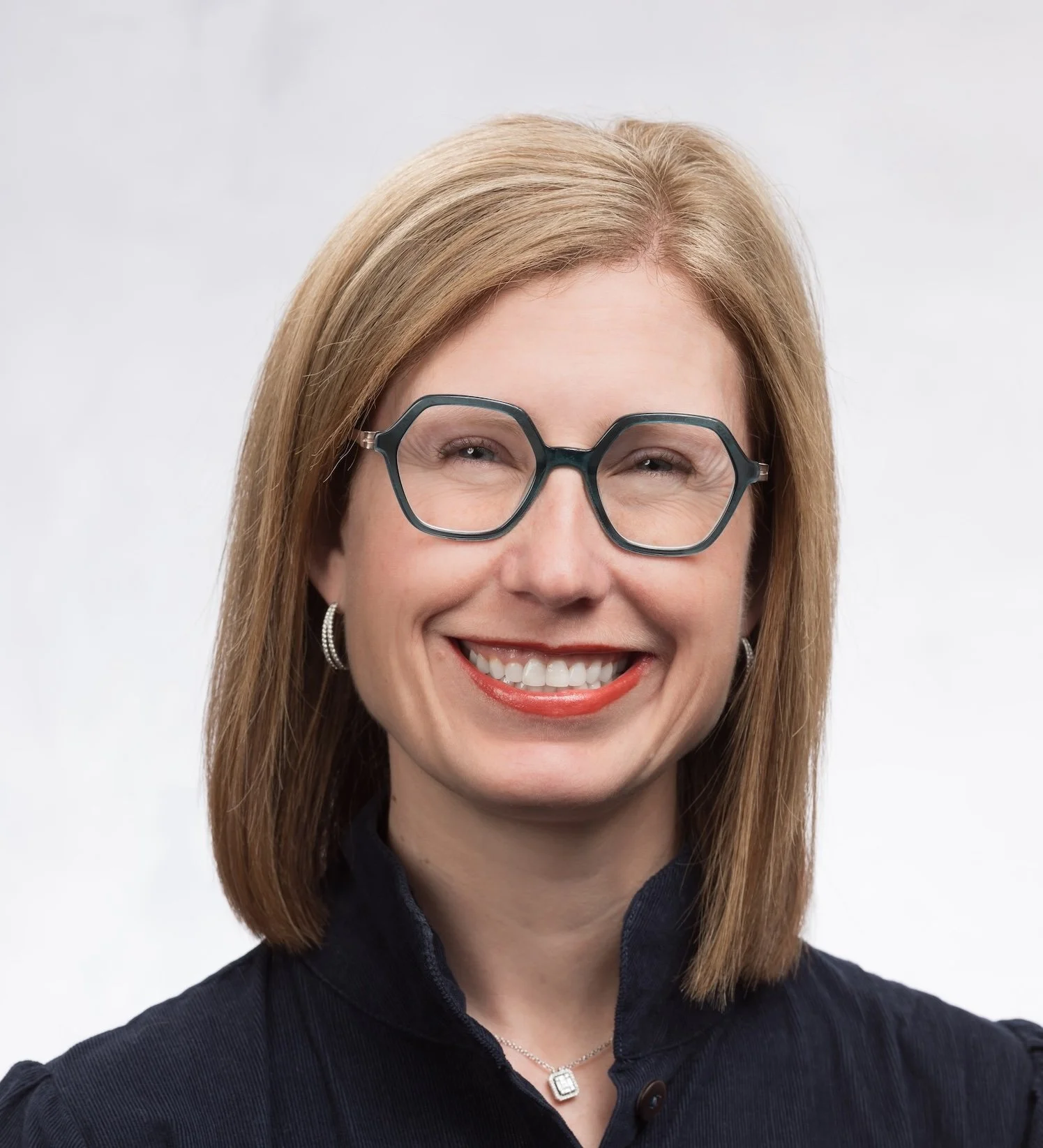
Laura Gerald, who joined the trust as president in July of 2016, soon came to the conclusion that more strategic precision was needed, building upon work already in place. “Ten years before I got there,” she told me, “the trust narrowed its investments into focus areas from a desire to see greater impact. After our assessment, we determined that we had not gone the next step in defining what that impact was.”
The trust’s evolved strategy prioritizes outcomes over specific issues. It seeks funding strategies that move the needle on measurable goals like decreasing statewide uninsured rates, or increasing low-income Forsyth County residents’ access to social services. To reach those outcomes, Gerald said, “it’s hard to ignore that systems change will probably get us farther than individual change or programs aimed at individuals.”
Emphasizing that the trust wants to “do with rather than for people,” Gerald told me that listening to the community is a key part of local systems change work, as is a willingness to fund education and advocacy around issues like Medicaid expansion. Focusing on Forsyth County, the trust’s Great Expectations early childhood initiative takes cues from a listening and learning survey of more than 1,200 parents and 300 caregivers. Another joint listening and learning process with the Winston-Salem Foundation explored ways to address income mobility, which, in the Forsyth County area, remains stalled at some of the lowest levels in the nation.
The trust is currently hosting a series of engagement events to support rural communities throughout North Carolina as they confront health challenges, opioid abuse among them. It’s treating those events as a way to get the word out to local leaders and nonprofits about the trust’s updated approach. But those engagement tours have also highlighted the region’s persistent degree of need, despite the longtime presence of social service funders. Gerald hopes to increase the trust’s impact by “holding ourselves to goals, rather than just naming areas where we want to fund.”
“Ultimately, everything is local”
Along with entrenched urban poverty rooted in segregation, rural America’s slow decline ranks among the thorniest problems contemporary funders are trying to tackle. While it can be tempting for big-city philanthropies to swoop in and develop rural programming from the top down, local funders and nonprofit leaders consistently speak of the need for a more nuanced approach. That’s especially the case in the South, where cultural and contextual differences can make it hard for funders from places like New York City—or even Winston-Salem—to parse the landscape.
Still, as we discussed in a piece on rural philanthropy earlier this year, non-prescriptive and community-led giving can be effective in rural and urban places alike. The distinctions lie in demographics, needs, challenges, strengths and resources. For example, nonprofits in rural areas may have a greater need for capacity-building support, while also benefiting from a more developed sense of community ownership than their urban peers.
Gerald spoke of the Kate B. Reynolds Charitable Trust as a conduit channeling issues from local communities up to the state level and beyond. “Ultimately, everything is local. By working with the community, we are evolving how we think about partnership and power-sharing,” she said. “National funders have a great deal of expertise, but you have to utilize relationships and trust built in the community on a state and local level. Those of us working at that level are probably in a better position to understand those issues.”
As a well-established regional funding institution that can straddle the line between community work and public-sector engagement, the trust is in a good position to realize those aims. The same is true for Gerald herself, who previously served as North Carolina’s state health director and led the North Carolina Health and Wellness Trust Fund Commission.
But there are also plenty of newcomers entering this space, including health legacy foundations created when nonprofit health organizations are sold or transition to for-profit status. It’ll be interesting to see how an influx of new local funding affects health issues like insurance coverage and opioid addiction, as well as challenges like housing availability and access to healthy food and green space.
To that end, Gerald sees the Kate B. Reynolds Charitable Trust as a vehicle to foster greater coordination and collaboration among safety net providers in North Carolina. She’s heartened by the fact that in several places where the trust gives, minority groups have come together at places like the West Marion Community Forum to tackle local problems, building a power base in the process. But given the region’s challenges, building a more inclusive economy for low-income groups and racial minorities “may take a longer journey,” she said. At this point, the trust and some of its philanthropic peers in North Carolina seem ready to travel that path.
Related:
Myths and Opportunities: What’s Happening in Rural Philanthropy?
These Health Foundations Are Everywhere. And They’re Stepping Up Their Game
Shared History: Elevating Structural Change Grantmaking in the South