


OVERVIEW: The Clif Family Foundation (formerly the Clif Bar Family Foundation) is a California-based funder that prioritizes sustainable agriculture, food systems, the environment and related human health.
IP TAKE: Clif Family Foundation is an unusually accessible environmental and food-systems funder. Its twice-yearly Open Call offers one-year general operating grants of $5,000 to $50,000, and fiscally sponsored projects may apply. The sweet spot is a community-rooted organization with a budget below $8 million that combines practical work with organizing, advocacy, leadership development or another strategy for systems change.
Larger funding is harder to crack. Clif’s Food Systems Transformation and Climate Justice programs are invitation-only and increasingly support movement infrastructure, frontline leadership, community ownership and policy change. Prospects seeking this level of support will need visibility within the farmworker justice, regenerative agriculture, environmental justice, energy democracy or climate-organizing networks where the foundation’s staff and grantees are active.
Do not pitch Clif as a broad health, conservation or food-relief funder. Medical centers, conventional food banks, stand-alone gardens and direct-service programs without a wider change strategy are unlikely to compete. For smaller groups, the Open Call is the clear entry point. For larger or invitation-only grants, relationships, coalition participation and evidence of community-led systemic impact will matter most.
PROFILE: The Clif Family Foundation, formerly the Clif Bar Family Foundation, was launched in 2006 by Kit Crawford and her husband Gary Erickson, founders of energy and health food brand Clif Bar & Co.
The Clif Family Foundation remained a small corporate foundation associated with Clif Bar & Co. until 2022, when Clif Bar was acquired by Mondelez International in a $2.9 billion deal, and the foundation became an independent entity. That same year, the foundation’s assets ballooned from $500,000 to $500 million. According to reporting at Forbes, this was the direct result of charitable contributions from Kit and Gary, who used their profits from the corporation’s sale to fund the foundation.
The foundation’s three-pronged mission is to “transform food systems, revitalize the environment, and enhance community health.” Its grantmaking includes operational support and project specific funding for groups working in its priority areas: Regenerative and Organic Farming, Food Production Workers’ Health and Safety, Climate Justice, Healthy Food Access, Inclusive Outdoor Access, and Indoors and Outdoors Safe from Pollution.
Grants for Food Systems and Agriculture
Clif’s Food Systems Transformation program supports organizations working to make agriculture and food production more equitable, regenerative and community-centered.
- The program focuses on three overlapping areas: farmworker justice, health and safety; access to nutritious food produced through equitable and regenerative systems; and organic or regenerative agriculture that incorporates labor, racial-equity and community considerations.
- The foundation is interested in more than conventional agricultural education or food distribution. It favors work capable of changing policies, markets and power relationships. Relevant approaches include grassroots organizing, leadership development, workforce development, advocacy, narrative change and efforts to increase community ownership or control within food systems.
- Recent and longstanding grantees illustrate this range. The foundation’s database includes the Black Farmer Fund, which supports Black farmers and food entrepreneurs; Cultivate Kansas City, which works with urban growers and food-system entrepreneurs; and the Farmlink Project, which redirects surplus farm products while addressing gaps in food distribution.
- The larger Food Systems Transformation program is invitation-only. Smaller food and agriculture organizations may also seek support through the Open Call, provided their work aligns with the foundation’s broader priorities and goes beyond stand-alone direct service.
- Food banks, school gardens and community gardens are generally poor fits unless they can demonstrate wider systems change. A food-access organization, for example, will be more competitive if it also organizes residents, changes procurement systems, supports community ownership, advances policy or strengthens regional food economies.
Grants for Climate Justice
The invitation-only Climate Justice program backs community-centered responses to climate change, particularly those led by or accountable to communities that have been historically marginalized.
- Its current work falls into three areas: Local Energy Transition & Fairness; Youth-Directed Climate Movements and Climate Resilience & Nature-Based Solutions, which supports community-led efforts and nature-based strategies through participatory research, technical assistance, the promotion of sustainable, plant-forward diets, and educational narratives that highlight environmental challenges and solutions.
- The foundation supports organizing, policy advocacy, leadership development, narrative work, workforce strategies and other efforts aimed at systemic change. This makes environmental justice organizations, community power-building groups, energy-democracy advocates, climate-job coalitions and movement intermediaries especially strong prospects.
- Recent large grants include $625,000 to Social and Environmental Entrepreneurs, $400,000 to State Power Fund and $350,000 to the Chisholm Legacy Project. These awards suggest an interest in movement infrastructure, frontline leadership, fiscal or organizational support and state-level power-building, although the publicly available grant list does not always provide sufficiently detailed purpose statements to assign every award to a specific program.
- Clif is unlikely to fund proposals centered on nuclear power, hydrogen, biofuels, carbon offsets, direct air capture or most carbon-capture-and-storage approaches. The foundation makes an exception for certain nature-based sequestration strategies involving working lands.
Grants for Health, Nutrition and Food Access
Clif’s health-related giving is closely connected to food, environmental conditions and access to safe places for physical activity. It does not operate a broad healthcare or medical-research program.
- Its Healthy Food Access priority supports systems that make nutritious and sustainably produced food affordable, culturally appropriate and available to disadvantaged communities.
- Its Inclusive Outdoor Access priority supports efforts to expand access to safe outdoor spaces that promote physical activity and mental health. The foundation also backs preventative approaches that reduce exposure to toxins in air, water, soil, buildings and manufactured materials.
These priorities are most clearly accessible through the Open Call. The foundation does not identify separate invitation-only programs for outdoor access or pollution prevention, although qualifying organizations may also overlap with its larger Climate Justice work.
- Strong prospects may include community-led environmental health groups, organizations addressing toxic exposure, outdoor-equity organizations and local coalitions connecting public health to land use, transportation, pollution or neighborhood conditions.
- Medical centers and proposals focused primarily on clinical services are not eligible for the Open Call.
Other Opportunities:
The foundation’s Open Call permits applications from projects operating under qualified fiscal sponsors. This creates a pathway for newer or unincorporated initiatives that otherwise fit the foundation’s criteria. Current materials do not clarify whether the same fiscal-sponsorship eligibility applies to invitation-only funding.
Clif began making grants in Canada in 2018, initially supporting ecological agriculture as a response to climate change. Canadian recipients continued to appear in grant records through at least 2023. Current guidelines, however, prioritize organizations working in the United States and its unincorporated territories, while the invitation-only programs are described as supporting U.S. nonprofits. Canadian organizations should not assume that an active application pathway remains available without first confirming eligibility with the foundation.
Important Grant Details:
In 2024, the foundation distributed about $24.1 million through 459 grants, with a median award of $20,000 and an overall range reaching $3 million. Larger grants are likely to include invitation-only, special-purpose or discretionary funding and should not be treated as realistic Open Call request amounts.
- Clif’s Open Call provides one-year general operating grants ranging from $5,000 to $50,000. Applications are reviewed twice annually, with deadlines of March 1 and August 1. Decisions are generally announced about four months after each deadline.
- The foundation gives priority to organizations that:
- Align closely with one or more of its six priorities.
- Work primarily in the United States or its territories.
- Maintain strong ties to the communities they serve.
- Have annual operating budgets below $8 million.
- Pursue grassroots change at the local, state or national level.
- The $8 million budget preference applies to the Open Call. The foundation does not publish a comparable size limit for invitation-only grantees.
- Clif accepts unsolicited applications through its Open Call. Eligible applicants must be recognized 501(c)(3) organizations or operate under qualified fiscal sponsors. Applicants begin with an online eligibility questionnaire and application through the foundation’s current Temelio portal.
- For additional information about the foundation’s giving, see its searchable grantee database.
- Applicants with questions about the Open Call should review the guidelines before contacting the foundation and should use its general information address rather than approaching the invitation-only program officers. Reach out with questions via email at info@cliffamilyfoundation.org. The foundation’s phone number is listed as (510) 596-6383.
PEOPLE:
Search for staff contact info and bios in PeopleFinder (paid subscribers only).
LINKS:
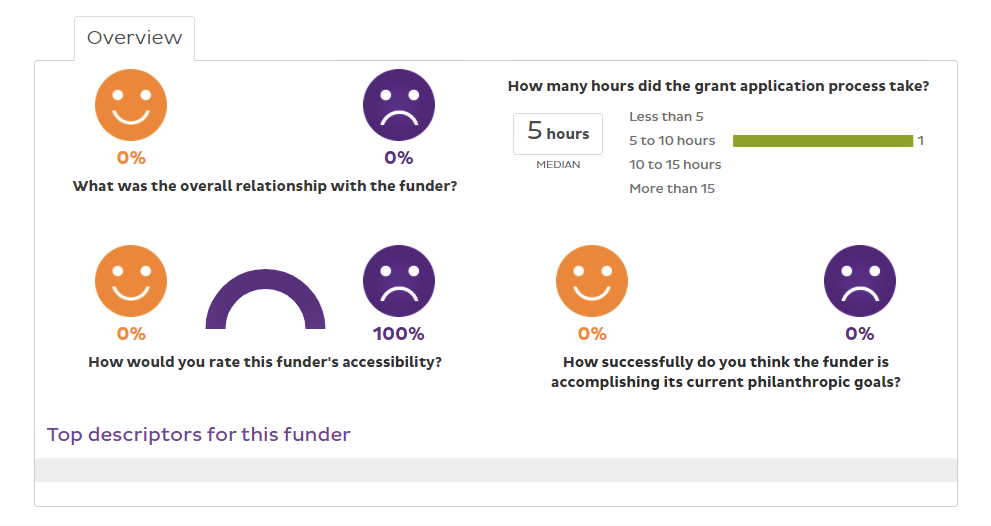
What Grantees Tell GrantAdvisor:

Last updated on