Featuring a controversial donor and corporate intrigue, a recent Inside Philanthropy piece on ex-Papa John’s CEO John Schnatter and his previous employer’s gifts to two universities made for breathless reading. Yet from a purely financial perspective, the three donations in question totaled less than $2 million—chump change in a higher ed fundraising space that saw American universities raise a record $46.7 billion in fiscal 2018.
Why such a hullabaloo over donations that amount to less money than Harvard University raises on an average day? The answer is simple. The gifts flowed to two historically black colleges and universities (HBCUs)—Kentucky’s Simmons College and North Carolina’s Bennett College. This is newsworthy because at a time when higher ed donors profess an interest in equity, and many institutional funders are focusing more attention on race, such schools continue to receive scant support as money continues to flow to more affluent public and private universities.
HBCUs aren’t alone in waiting for big checks that rarely materialize. In 2016, I asked if Herb Alpert’s $10.1 million donation to Los Angeles City College would focus donors’ attention on woefully underfunded community colleges. Two years later, I pondered the possibility that Michael Bloomberg’s gift of $1.8 billion in financial aid to Johns Hopkins University would make alumni reconsider their love affair with tuition-busting capital projects. (In each case, the answer has been a resounding “no.”)
In 2017, donors made 462 gifts of $1 million or more to higher education. HBCUs received just two of them.
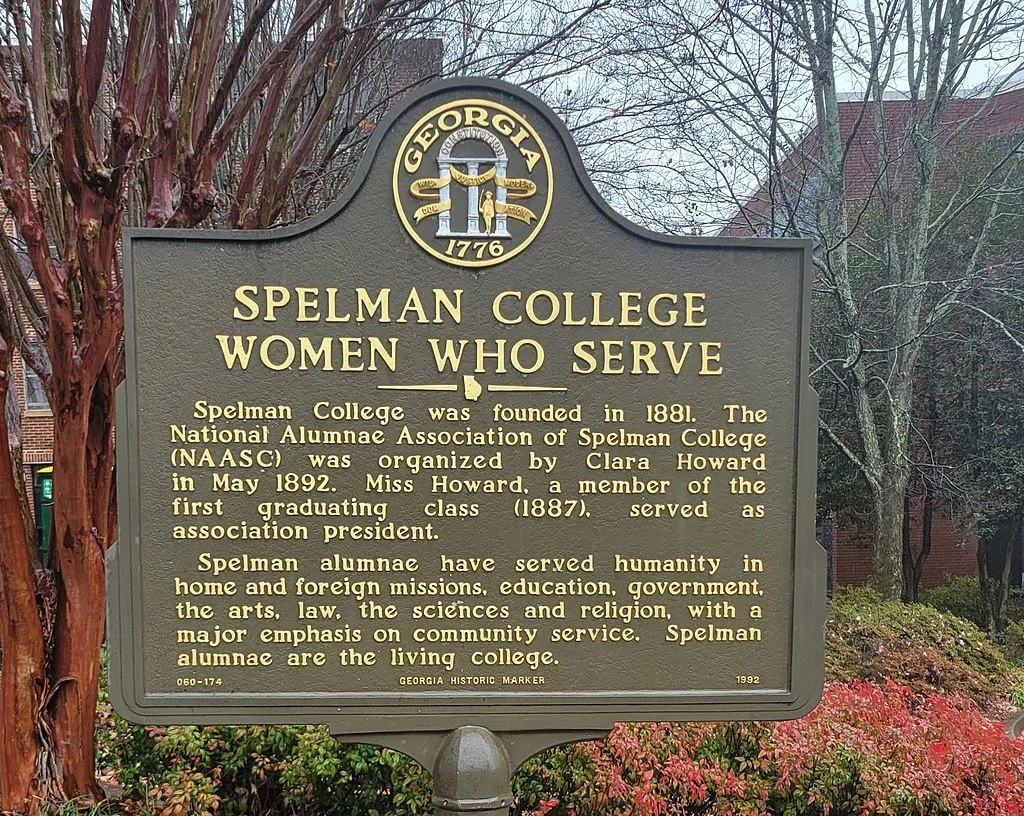
Last year, when Ronda Stryker and William Johnston made a $30 million gift to Atlanta’s Spelman College, I wondered if mega-donors would finally give HBCUs a second look. I wasn’t alone. Nonprofit Quarterly’s Debby Warren called the Stryker/Johnston gift an “inflection point,” and asked if other donors would “step up” to support HBCUs that haven’t recovered from the Great Recession and were disproportionately affected by a 2011 change to the PLUS federal student loan program.
It’s been nine months since the Stryker-Johnson gift. Have donors stepped up? As you’d expect, it depends on the definition of “stepping up.” Citing data from the Chronicle of Philanthropy’s database of large charitable gifts, The Atlantic’s Adam Harris found that more than a dozen donations of $5 million or more were made to universities in the first month of 2019 alone. None of these gifts went to an HBCU.
However, HBCUs’ prospects improved as the year progressed, thanks to Robert F. Smith’s pledge to pay off student loans for Morehouse College’s graduating class of 2019 and UnitedHealth Group’s $8.25 million partnership with the Atlanta University Center Consortium (AUCC), the oldest and largest consortium of HBCUs, to launch a data science initiative.
Obstacles to Support
There are many reasons that HBCU fundraisers lag behind their predominantly white institution (PWI) counterparts. Most obviously, these schools, like community colleges and trade schools, don’t have a lot of rich alums, in contrast to Ivy League schools, which reap most of their mega-gifts from incredibly wealthy graduates.
Also, HBCUs have historically been at a disadvantage in large philanthropic gifts from non-alumni. On the surface, this isn’t that surprising. It’s less likely that a donor will give money to a school where he or she has no direct connection. While this tendency also applies to PWIs, it’s far more acute for HBCUs. Why?
For starters, non-alumni donors may be reluctant to support HBCUs that have a six-year degree-completion rate of 32 percent, according to a recent report from the Education Trust, compared with a 45 percent rate for black students at all kinds of institutions. But these findings, said Ray Franke, an assistant professor of higher education at the University of Massachusetts at Boston, don’t take into account systemic differences between students, like socioeconomic status or institutional disparities in revenues and wealth.
Marybeth Gasman, a professor at the University of Pennsylvania Graduate School of Education, speaking to Bloomberg, pointed to another reason that non-alumni skip over HBCUs. “There’s racism involved in acquiring funds.” In the past, “funders did not trust African Americans to manage their money, so they didn’t give.” As a result, HBCUs can’t gain access to the kinds of investment strategies available to schools with multibillion-dollar endowments. “Wealth begets wealth,” Gasman said. “This is the same thing that happens with HBCUs.”
This reality is compounded by the fact that although African Americans tend to give a larger share of their discretionary income to charity than do white Americans, they also tend to have less accumulated wealth, even at similar levels of educational attainment. According to the New York Times, for every $100 in white family wealth, black families hold just $5.04. HBCUs are also facing challenges endemic to other small private universities, like dwindling enrollment, deteriorating infrastructure, student defaults and rising pension costs.
Add it all up, and it’s hard to fault HBCUs for accepting support from unlikely funders like the Koch brothers, who, critics argue, have bankrolled an implicitly racist agenda. As Dillard University President Walter Kimbrough said when asked about receiving Koch cash, “I’ll still fight for things important to the African-American community, and I’ll use their money to do it.”
Two Steps Forward
While certainly a cause for celebration, the biggest recent HBCU gift also underscored the severity of the challenges facing these schools. Back in May, billionaire businessman Robert F. Smith announced that he would pay off student loans for every member of the graduating class of 2019 at the all-male historically black Morehouse College in Atlanta. The gift is a part of the college’s Student Success Program, which will now accept donations with the purpose of reducing and eliminating loans of Morehouse students.
At the time, outlets mostly framed the gift through the larger lens of escalating student debt, and understandably so. As the New York Times reported, “The announcement came at a time of growing calls across the country to do something about the mounting burden of student loan debt, which has more than doubled in the past decade. Presidential candidates like Elizabeth Warren have made debt cancellation a key plank in their campaign platforms, and some states and institutions are moving to make college tuition-free.”
The student loan crisis is so vast and extreme that lost in the coverage surrounding Smith’s announcement was the fact that, according to the United Negro College Fund, the average debt for graduates of HBCUs is $26,266, double that of non-HBCU students. The takeaway here is self-evident. While many donors have turned their attention to student debt, under-resourced HBCUs will have to work twice as hard to provide comparable relief for their students. (In late September, Smith got the final tab for his gift to Morehouse: $34 million.)
In July, UnitedHealth Group announced a five-year, $8.25 million partnership with the AUCC to launch a data science initiative. The AUCC Data Science Initiative will offer technical classes and certificate programs at AUCC member institutions—Clark Atlanta University, Morehouse College, Morehouse School of Medicine and Spelman College—for students seeking to specialize in data science or apply data analysis in their own fields.
The gift comes as private and corporate donors like UnitedHealth Group, attuned to rising demand for next-generation jobs, have donated tens of millions of dollars for data science initiatives across the country. Given the fact that these gifts have flowed to large, private public institutions, it’s refreshing to see UnitedHealth Group support a consortium of HBCUs, which have historically served as a significant pipeline for black STEM degree holders.
Additional Gifts to Morehouse
A search of Philanthropy News Digest’s grants database yields other gifts flowing to HBCUs over the past nine months. Again, the dollar amounts may not be particularly stunning, but given the challenges facing HBCUs, every little bit helps.
In April, Morehouse announced that Eugene McGowan Jr. left $4.6 million to establish the Eugene McGowan Jr. endowed scholarship. McGowan was a prominent Delaware psychologist and former Atlanta Public Schools teacher. He earned a bachelor’s degree from Morehouse and a Ph.D. in psychology in the 1940s. He died in 2017 at 100.
In late September, Dr. William F. Pickard and Judson W. Pickard Jr. donated $2 million to Morehouse to fund a new scholarship for students who live in three Midwestern cities and LaGrange, Georgia, their childhood hometown. William is a philanthropist, CEO of Bearwood Management McDonald’s, a co-managing partner for MGM Grand Detroit Casino, and chairman and founder of the multi-billion-dollar business enterprise GAA Manufacturing and Supply Chain Management and GAA New Ventures. Judson and his family own and operate a number of McDonald’s franchises in the greater Cincinnati area.
“We are committed to helping African American men thrive as leaders, scholars and future businessmen,” said Judson W. Pickard on behalf of the Pickard Family. “Morehouse College’s mission is focused on developing men who are committed to academic excellence, community service, and leadership. This partnership aligns with our family’s vision and values on the impact of historically black colleges on student success.”
Causes for (Cautious) Optimism
In the absence of a significant economic downturn, can HBCUs sustain this momentum, however halting, in the future? Two factors suggest it’s possible. First, consider the data. While it’s irrefutable that a deeply entrenched racial wealth gap helps to explain the relative lack of support for HBCUs, we’ve reported often on a rising tide of giving by well-heeled African-American donors. As Morehouse College president emeritus Robert Franklin recently said, “With all of the black wealth out there and the huge gifts some colleges have received from African-Americans, one would think that our institutions, also, should receive these gifts.”
Second, a growing body of research and commentary argues that the current higher education system exacerbates inequality. (Check out recent examples here, here and here.) Equity-minded donors can attempt to change the system from within, or instead pivot toward HBCUs, which, according to a recent survey from the Rutgers Center for Minority Serving Institutions, are producing more upwardly mobile graduates than PWIs. (Community colleges have made a similarly compelling argument.) A growing focus on racial equity by institutional funders is another reason for optimism.