Michael Bloomberg’s $1.8 billion gift to his alma mater Johns Hopkins University kickstarted a debate about how philanthropy can best help economically disadvantaged kids gain access to an affordable college education. Yet up until recently, the discussion has largely overlooked the struggle of rural high school students to secure post-secondary degrees.
This is an issue that should resonate with equity-focused funders. While rural students graduate from high school at higher rates than urban students, and at about the same levels as their suburban counterparts, only 59 percent go straight to college compared with 62 percent of urban and 67 percent of suburban high school graduates. And once they get to college, they’re more likely to drop out. Fewer than one in five rural adults aged 25 and older have college degrees, says the U.S. Department of Agriculture’s Economic Research Service.
Despite this data, only a handful of four-year universities and colleges provide financial and academic support to rural students along the same lines as offerings for urban students. Funders have also been curiously quiet on this issue. Fortunately, news out of Tennessee provides evidence that this dynamic may be changing.
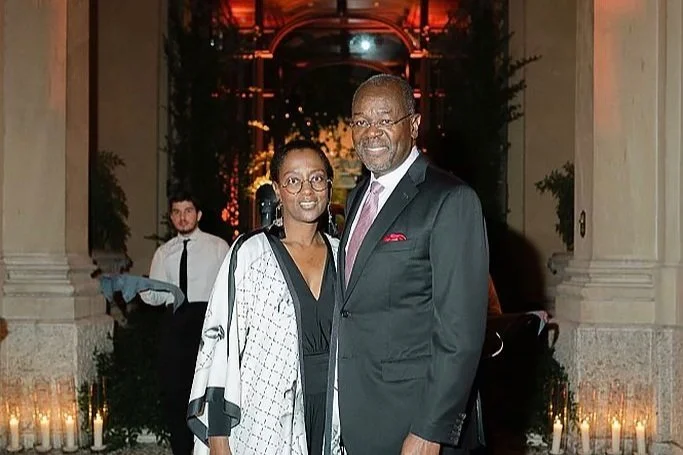
Bill and Rosann Nunnelly made a $22 million gift to the University of Tennessee (UT) at Martin earmarked for scholarship support that will give preference to students from Hickman County, a rural part of the state where Bill was raised on a cattle and feed grain farm. The donation will occur when the Nunnellys are deceased, although four Hickman County students will begin receiving scholarships this fall. Students from other rural counties will also be eligible. More than 90 scholarships could be awarded annually through the gift, the largest in the history of the campus.
Bill received a Bachelor of Science in Education degree in 1970 from UT Martin before joining the U.S. Army, where he was commissioned as a second lieutenant. He also earned a Master of Education degree from Boston University. He went on to become a successful entrepreneur in the restaurant, wine and liquor businesses. The Nunnellys are trustees at the Naples Children & Education Foundation.
Philanthropy and Rural America
The Nunnellys’ gift to UT Martin underscores how recruiting rural students remains a blind spot for many higher ed funders. This is symptomatic of a larger trend. With a few exceptions like the Ford Foundation, the W.K. Kellogg Foundation, and more recently, the Robert Wood Johnson Foundation, major foundations have often been tuned out to the challenges facing rural America.
Back in September in 2015, Tom Vilsack, secretary of the U.S. Department of Agriculture, addressed the National Rural Assembly and lamented this lack of philanthropic support. “What we’ve seen, unfortunately tragically, is not an increase in investment; we’ve actually seen a decrease. Private philanthropy needs to understand the role that rural America is going to play in the really big picture.”
Commentators have posited many theories regarding why philanthropy has traditionally ignored rural America. The money is concentrated in urban areas. The liberal philanthropoid class is largely drawn from the ranks of a highly educated meritocracy that’s been doing quite well in the new information age. A majority of Americans reside in or around urban centers. The city represents the future; the farm is the past.
Funders aren’t alone when it comes to this line of thinking. Writing in the Hechinger Report, Aaron Gettinger argues that the reason there are so few rural students attending college is the simple fact that colleges don’t bother to recruit them in the first place. Admissions officers, just like big funders, have taken rural America for granted.
A year after Vilsack’s plea, Donald Trump was elected president. Rural and white working-class voters put him over the top. Big foundations on the coast were shocked. Tom Vilsack, I suspect, probably wasn’t.
In an election post-mortem, David Callahan laid out the case regarding philanthropy’s neglect of rural and white working-class America. Funders ignored a laundry list of important issues, like globalization, the opioid epidemic and the looming threat of automation. And funders’ ambitious and uneven efforts to combat inequality is mostly an urban affair, despite the fact that, according to the 2013 American Community Survey, nearly 40 percent of African Americans living in non-metro counties fall below the poverty line, compared with around 16 percent of whites.
“Philanthropy, as we know, has never done a very good job of reaching” rural areas, Callahan wrote. “Now would be a good time to revisit that conversation.”
Calibrating the Recruiting Pitch
Since the 2016 election, we’ve seen an encouraging uptick in philanthropic support for rural America. In places like Appalachia, the rural South, Texas, the Upper Midwest and the Great Lakes region, grantmakers have backed a wide variety of projects to revitalize economies, improve healthcare, and rebuild local pride of place. What’s more, funders dialed in to the challenges of rural America increasingly stress the importance of getting rural kids to attend college.
Speaking with IP’s Caitlin Reilly last year, Ned Calonge, president of the Colorado Trust articulated what happens when rural Americans don’t attend college. They can’t find jobs. They’re left without many choices. “Without opportunity and without hope, it’s easy to fall into drugs and other ways of coping. We see that in the rural areas.”
Universities and funders are also motivated by what can be delicately described as enlightened self-interest. With a roaring economy and a shrinking number of college-age students, enrollment at universities and colleges has fallen by 2.9 million since its last peak in 2011. Schools need to fill seats, and rural students represent a promising untapped demographic.
A big challenge facing funders and universities moving forward is effectively recruiting high school students. Writing in Inside Higher Ed, Rick Seltzer notes that many universities have found that the usual urban- and suburban-focused playbooks don’t apply. Some are starting from scratch. And most are learning that “rural students” aren’t a homogeneous demographic.
For example, students in areas reliant on the agriculture industry have different interests than those in coal country. Students don’t have money to spend on college applications or standardized tests, much less test prep courses. And colleges’ online recruitment efforts frequently underperform, since many rural communities lack widespread internet infrastructure.
The big takeaway? “Rurality is different everywhere,” said Jennifer Carroll, professional learning lead at Kentucky Valley Educational Cooperative.
Growing Support For Rural Students
Universities have begun adopting approaches resembling that of Bill and Rosann Nunnelly’s gift, targeting students from a specific rural part of a state. For instance, in the fall of 2019, the University of Michigan’s Kessler Presidential Scholars Program will add scholarships and academic support for up to 20 first-generation students from the state’s predominantly rural Upper Peninsula. Alumnus Fred Wilpon, real estate developer and owner of the New York Mets, and his wife, Judy Kessler Wilpon, established the program with a $5 million commitment in 2008.
Next fall, Cornell University, with support from the Wilpons, will launch the Irene and Morris B. Kessler Presidential Scholars Program, modeled after the University of Michigan program. “The dream is that ultimately, we would be able to bring programs like this across the country,” said Fred.
Last October, the University of Georgia announced that its ALL Georgia Program will eventually provide $7,000 scholarships to each of up to 24 rural students. And the National Association of Colleges and Employers reports increased support for rural students at the University of North Carolina, Clemson University, Swarthmore College and Carleton College.
Looking ahead, the prognosis from a fundraising perspective is encouraging, as donors, cognizant of the metastasizing student debt crisis, have shown a strong interest in providing financial support for economically disadvantaged students of all backgrounds. Nor is this sentiment limited to baby boomer donors. Research firm Achieve found that 51 percent of millennial alumni preferred giving current students financial aid or scholarships.
Institutional funders are also cutting checks to enroll more rural students. The John E. Morgan Foundation, the philanthropic arm of textile industry entrepreneur John E. Morgan, provides scholarship support for students from Pennsylvania’s rural Tamaqua and Schuylkill counties. Last October, the foundation awarded a second grant to Lycoming College in the amount of $500,000, bringing its total support of the school to $1 million.
Last year, the Greater Texas Foundation announced a $3 million grant to boost college access for rural students. And earlier this year, the Irvine Foundation announced a $5 million commitment to enroll poor kids in California’s 144 community colleges. Over 5 million Californians live in rural areas. And Bloomberg Philanthropies’ College Point uses “virtual counseling” to pair high-achieving rural students with college advisors.
Rural students also face significant integration challenges once they arrive at college, and tend to drop out, on average, at a much higher rate than their more well-to-do peers. As a result, schools have rolled out programs to ease the transition for these students. Earlier this year, Dartmouth College announced it was expanding its First Year Student Enrichment Program for first-year and low-income students, thanks to $13 million in private gifts, including a $10 million commitment from A. George “Skip” Battle, ’66.