The American higher ed fundraising boom has officially gone transcontinental. A recent study analyzing British foundations’ support for non-U.K. universities by UniversityPhilanthropy.com and the Cape Partnership found that North American universities received 49 percent, or approximately $125 million, from the U.K.’s leading foundations between 2014 and 2018.
Of the top 20 recipients, nine hailed from the United States. Boston University, which received $36 million, came in at No. 2, behind Australia’s Monash University ($39 million). Yale University was No. 3 with $25 million, while the University of California was No. 5, at $15 million. Other U.S.-based recipients included Drexel University ($11 million), Johns Hopkins University ($11 million), Columbia University ($8 million), New York University ($6 million), Washington University ($5 million) and Harvard University ($4 million).
African universities received 20 percent. In what may seem like a rather peculiar data point, European universities received a mere 6 percent.
Over 50 percent of funds disbursed to non-U.K. universities since 2014 came from one source: the Wellcome Trust, which has a $30 billion endowment and is a leading funder of medical research. The Wellcome Trust gave approximately $134 million to eight non-U.K. universities over the past five years.
The research surfaces some provocative questions. First, what explains U.K. foundations’ comparatively tepid support for European universities? And second, if there is money on the table, should already overworked American higher ed fundraisers, particularly those working for cutting-edge research institutions, ramp up their outreach to British foundations?
Europe Looks to the West
Institutions operating in high-tax European countries have historically relied on government support more than private philanthropy. But this dynamic is changing as European governments face exploding deficits, anemic growth, and an aging baby boomer population.
We’ve seen this challenge play out across the continent’s arts and culture sector. In 2006, Spain’s the Prado received 64.9 percent of its funding from the government. In 2015, the government provided just 32.4 percent of the museum’s $44 million budget. As a result, European museums are looking to domestic private funding sources as well as American expertise, corporations and donors to fill the funding gaps.
These institutions are “becoming more hip to what Americans are doing as they shift from public to private funding,” said Ellena E. Fotinatos, deputy director of donor and nonprofit services at the King Baudouin Foundation United States, whose mandate is to help European and African nonprofits raise money in this country. “With increased austerity in Europe, professional fundraising is growing more focused around this area.”
Yet European institutions’ growing interest in American-style philanthropy doesn’t jibe with the fact that, according to UniversityPhilanthropy.com and the Cape Partnership, non-U.K. European universities received only 6 percent of U.K. foundation funding between 2014 and 2018. Why are British foundations bypassing universities located across the English channel?
Robust Public Spending
I posed this question to the Cape Partnership’s Andrew Wigley. Continental European universities aren’t raking in donations because they “really don’t have the same culture of tapping into philanthropy that the U.S. and U.K. universities do,” he said. The reason for this is obvious: These universities are publicly funded to an extent that far eclipses that of their American and British counterparts.
Data from the Organisation for Economic Co-operation and Development underscores the sharp contrast. While public funding for “tertiary” education, defined as “the total expenditure on the highest level of education,” including universities, stands at 35 percent in the U.S., that figure is far higher in continental countries like Austria (95 percent!), Germany (80 percent), France (80 percent), and Spain (70 percent). The only European country with a lower percentage of public funding than the United States is the United Kingdom (25 percent).
Bottom line? Unlike cultural institutions like the Prado, there’s no urgent need for European universities to embrace an American-style, philanthropy-driven funding model just yet, although that, too, may be changing. “I do think philanthropy is on the rise as reliance on state funding comes under pressure,” Wigley said.
The U.K.’s low percentage of public funding, while perhaps surprising at first, proves Wigley’s point. The U.K. abandoned its free tuition model starting in 1998. Over the following decades, subsequent governments raised tuition in stages while adopting an American-lite model which incrementally shifted the tuition burden to students. Writing in Forbes, Preston Cooper noted that “English students do not pay tuition upfront, but rather use government-issued loans to pay back the cost of their education. Loan payments are set according to graduates’ incomes and remaining balances are forgiven after 30 years.”
At the time of this writing, tens of thousands of Americans on the hook for $1.5 trillion in student debt could not be reached for comment.
U.K. Universities Turn to Philanthropy
Twenty-one years after doing away with free tuition, philanthropy is now a large and growing part of the U.K. university funding model. Driven by concerns over Brexit’s impact on university coffers, donors gave over $1.2 billion to U.K. universities in 2015-16, according to a survey by the Council for Advancement and Support of Education (Case) Europe. The figure represents a 23 percent increase over the previous year. All told, U.K. universities have raised more than $11 billion since 2007.
“Philanthropic giving is now at the heart of U.K. university culture,” Case Global Vice President Tricia King said.
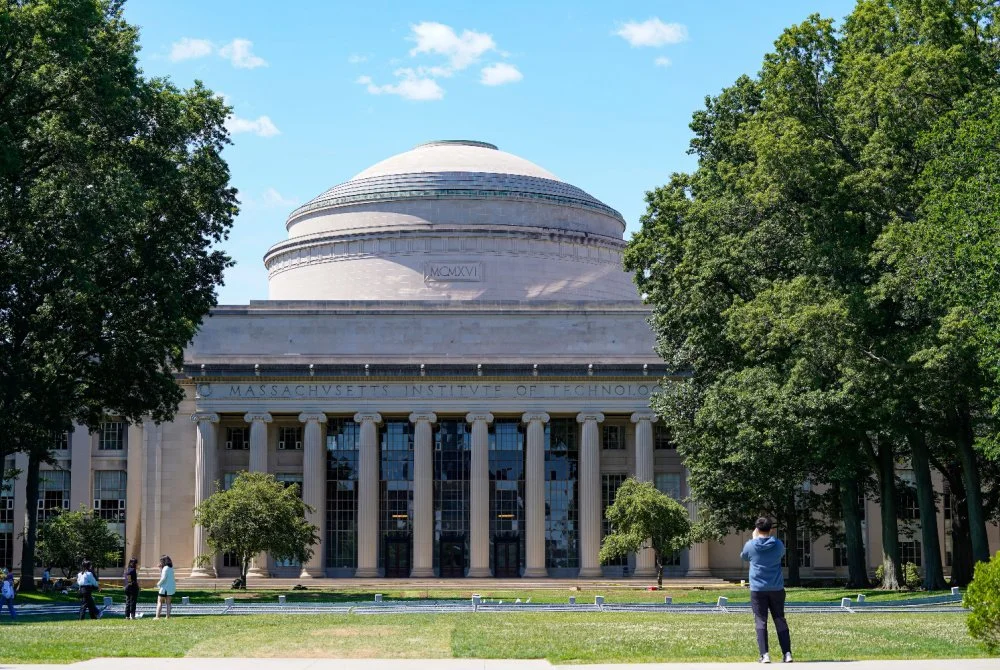
British universities have also been successfully engaging American donors for support. In June, Stephen Schwarzman gave Oxford University its largest single donation in modern history—a $188 million gift to fund humanities research and the new Institute for Ethics in AI. Schwarzman said the gift was “complementary” to his $350 million gift to MIT, which was also earmarked to explore the frontiers of AI.
It would be premature to suggest that American fundraisers should start to worry about a higher ed British Invasion in which their Anglo brethren swoop in to poach stateside donors. Nonetheless, Schwarzman doubles as an instructive and portentous psychographic profile. As giving continues to go global, higher ed donors no longer view geography as an obstacle to helping them advance their cherished projects.
The Cape Partnership report suggests that this dynamic also animates U.K. foundations’ support for American universities conducting innovative research with the potential for global impact.
A “Sensible Place” for U.S. Fundraisers
It’s promising, but American higher ed fundraisers shouldn’t sign up for afternoon tea-time etiquette classes just yet. The Cape Partnership study found that while British foundations awarded approximately $89 million to 24 non-U.K. universities in 2017, that number dropped significantly to $30 million in 2018.
Wigley attributes this drop to decreased funding from the British elephant in the room, the Wellcome Trust. “This speaks to the cyclical character of grant giving by large disbursing foundations,” Wigley said, as “large-scale funding for programs, particularly where it relates to universities and scientific research, is often projected over multi-year timescales.”
For example, the trust committed approximately $155.5 million over five years to CARB-X, a Boston University-based public-private partnership launched two years ago by the U.S. Department of Health and Human Services to give financial, scientific and business support to small companies focusing on drug-resistant bacteria. That was in 2017 when, as noted, its total payout to non-U.K. universities stood at a hefty $89 million.
Because of this multi-year model of giving, funding to non-U.K. universities from 2014 to 2018 appears, to quote Wigley, “very lumpy”—$35 million, $84 million, $18 million, $89 million and $30 million, respectively. But the numbers also suggest that after a down year in 2018, British foundations are due to dig deep again in 2019. Wigley suspects they will, thanks in part to the fact that the Wellcome Trust said it would allocate over $1 billion over the year. As a result, he anticipates “non-U.K. universities to get a slice of that cake.”
Wigley also predicts we’ll see a funding increase among other big U.K.-based grantmakers who gave less in 2018 than in previous years, like the Arcadia Fund and the Children’s Investment Fund Foundation.
Looking ahead, Wigley is bullish when it comes to the burgeoning “special relationship” between British foundations and American universities. “U.S. universities have an opportunity and built-in advantage to tapping into U.K. philanthropy,” he said. “The strong historic cultural and language ties between the two countries are clearly advantageous.” Wigley believes these ties will strengthen over time. The U.K., wracked by the looming Brexit, is pivoting away from Europe and toward the U.S. and other markets, suggesting that the U.K. will continue to be “a sensible place for U.S. university fundraisers to focus their efforts.”
Also expect that British foundations will continue to support American universities due to the simple fact that stateside fundraisers operate finely tuned money-raising machines, and have been successfully engaging foreign alumni for decades. Miles—or is it metres?—ahead of their European counterparts, American fundraisers have the requisite resources, infrastructure and experience to make the pivot toward the U.K.’s foundation community. According to Wigley, it’s already happening.
“The U.S. is assertive in raising funds and profile in the U.K., and appears to invest resources in tapping into that philanthropy,” he said.