


Editor’s Note: This article was originally published on September 22, 2026.
Since last winter, my mother had been talking about taking me to Martha’s Vineyard, specifically to Oak Bluffs, the island’s historically Black community. Then, like clockwork, the weekend before my flight this summer, I was inundated with news of alpha-gal syndrome (AGS), which did a number on my hypochondriac mind.
At least a dozen major news reports and clinical studies on alpha-gal syndrome appeared across national media and medical journals in recent weeks and months. On Martha’s Vineyard, the problem has become particularly pronounced. The island is abundant in deer and ticks, and 2024 testing at Martha’s Vineyard Hospital found that 523 of more than 1,200 people were positive for alpha-gal antibodies, a more than 40% positivity rate. Now, that doesn’t mean 40% of the island’s residents have the syndrome, but it is a signal of how prevalent sensitization has become.
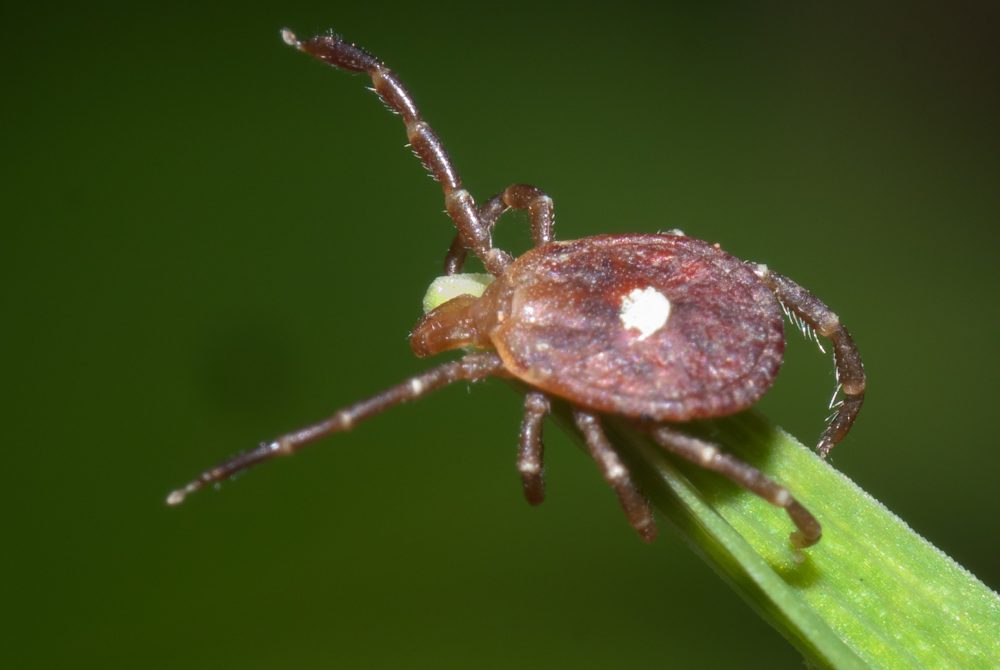
So what exactly is alpha-gal? It’s short for galactose-alpha-1,3-galactose, a sugar found in most mammals. In the U.S., the lone star tick is the best-known culprit for passing along AGS to humans. After a bite, the immune system can become sensitized to alpha-gal, setting off an allergic reaction to meat when the person later encounters it. Sometimes, the allergy resolves within a few years. But for others, it appears to persist indefinitely.
Unlike my nut allergy, which has me reaching for Benadryl within minutes and, if things get real, my EpiPen, alpha-gal reactions are often delayed. Symptoms typically appear two to six hours after exposure. The allergic response isn’t confined to just having a simple steak or burger, either. It can show up in gelatin, mammalian fats, some medications and other products derived from mammals. Some particularly sensitive people might even get a full-blown anaphylactic reaction from simply passing a grill and getting a whiff of meat fumes.
All of which meant that, for my trip, I packed like a man preparing to invade tick country.
But what is philanthropy doing about alpha-gal, a problem that may already affect hundreds of thousands of people in the U.S.? The short answer: not so much, yet.
Mainstream food allergy philanthropy began in the early ’90s with dedicated groups like the Food Allergy & Anaphylaxis Network (FAAN). Meanwhile, Food Allergy Research & Education (FARE), established in 2012 through a merger of FAAN and the Food Allergy Initiative, has committed over $70 million in the past decade to food allergy research, alongside newer entities like the Food Allergy Fund. A handful of billionaire donors like Nate Parker and Julia Koch are also in the mix. But while food allergies affect around 10% of U.S. adults and children (costing the U.S. economy upward of $370 billion annually), historical public and private funding has lagged far behind support for other chronic conditions with similar or even lower prevalence.
Alpha-gal is even more of a frontier, though there are signs that might change. In February, FARE and Alpha-gal Alliance, one of a handful of AGS-dedicated orgs, announced a new collaboration to improve public and clinical understanding of the disease. The collaboration brings together FARE’s national reach with Alpha-gal Alliance’s knowledge of the patient community with the aim of increasing visibility, improving education, and supporting those living with this condition.
So is alpha-gal about to become the next big thing in food allergy philanthropy? Here’s a bit more about what the funding landscape looks like now.
The food allergy infrastructure is already there
One reason alpha-gal could attract more philanthropic attention is that it doesn’t have to build an entirely new ecosystem from scratch. Food allergy philanthropy has been around for decades, driven in part by families who found themselves personally confronting conditions that received relatively little attention. East Coast couple David and Helen Jaffe, whose four children have severe food allergies, helped establish the Food Allergy Initiative, and in 1997, founded the Jaffe Food Allergy Institute at Mount Sinai, the first medical research institute dedicated to food allergy. In 2012, the late David Koch gave $10 million to the institute, creating the David H. and Julia Koch Research Program in Food Allergy Therapeutics.
The Koch family’s giving didn’t stop there. In 2017, Julia and David Koch gave another $10 million to establish a clinical research unit at Lucile Packard Children’s Hospital Stanford, within the Sean N. Parker Center for Allergy and Asthma Research. Son David Jr. has severe nut and shellfish allergies and is required to carry epinephrine.
Speaking of Sean Parker, while he may be better known for his cancer research mega-giving, the Facebook cofounder is also another major food allergy donor. In 2014, Parker pledged $24 million to establish the Sean N. Parker Center at Stanford, one of the largest private gifts to allergy research in the country at the time. Again, the story is personal. The tech billionaire and former Facebook president has severe, life-threatening allergies to peanuts, tree nuts and shellfish.
Alpha-gal’s dedicated organizations are still small
The list of philanthropies and nonprofits specifically dedicated to alpha-gal is short and many of these organizations are very new. The Alpha-gal Foundation was launched in 2024 by Candice Matthis and Debbie Nichols, two women who were diagnosed with the syndrome in 2019 and had previously built a community around their Two Alpha Gals platform blogging about their experiences. The public foundation focuses on patient support, education and community engagement, including resource guides, workshops and a food allergy mentorship program.
The foundation’s own fundraising materials provide a sense of the modest giving levels involved: $25 funds a resource-guide bundle, $100 supports a one-on-one crash course and $500 funds a six-week mentorship scholarship.
A nonprofit called the Alpha-gal Alliance, cofounded by Sharon Forsyth, a former conservation executive who herself has alpha-gal syndrome, works on research, education, institutional capacity and cross-sector coordination. Its sister organization, Alpha-gal Alliance Action Fund, is a 501c4 focused specifically on policy and lobbying. It’s working to pass bills like H.R.1178: Alpha-gal Allergen Inclusion Act, introduced in the House in 2025 and aimed at expanding the definition of major food allergens to include alpha-gal. Under current law, food labels generally must identify each major food allergen found in labeled food products.
Again, the numbers here are very small: Alpha-gal Alliance Action Fund does have publicly available tax information and reported a little under $60,000 in revenue in 2025, though information on individual contributors is hard to come by.
Then there’s the Alpha Gal Relief Project, another modest nonprofit which focuses on a similar mix of research funding, community outreach, and providing a support network.
Other tick-borne disease organizations, particularly those focused on Lyme disease, are much further along as philanthropic recipients and now advocate for AGS patients, too. Tick-Borne Conditions United, founded in 2018 and led by public health leader Jennifer Platt, includes a focus on alpha-gal. It has consistently reported revenue in the five-figure range of late, though it does not disclose contributors.
Another 501c4, the Center for Lyme Action, founded in 2019, has alpha-gal in its mandate. It was created by Bay Area Lyme Foundation and founding charter members Project Lyme and Laure L. Woods. Woods, a low-profile donor with a clinical research background, is a descendant of the Whittier family, early Beverly Hills developers and oil owners. Meanwhile, Alexandra Cohen is also a previous funder of the Center for Lyme Action. Cohen and her husband, billionaire hedge funder Steve Cohen, have been major givers for Lyme disease for over a decade. Like Woods, Alexandra Cohen has personally dealt with the disease.
Continuing developments in 2026
In February 2026, FARE and Alpha-gal Alliance announced a now-concluded collaboration to improve public and clinical understanding of alpha-gal syndrome. And in October, FARE will host a national AGS convening. “Our goal is to emerge from the National Convening with a patient-centered roadmap that identifies priorities across research, diagnosis, treatment, prevention, education and support,” said Sung Poblete, CEO of FARE, via email. “We are looking forward to sharing that framework for future philanthropic and partner investment.”
FARE has increasingly heard from AGS patients facing many of the same challenges as those with more familiar allergies, including difficulty finding knowledgeable clinicians, accessing credible information, and managing the condition in daily life.
For now, FARE’s AGS work is supported through philanthropic and partner funding, with the convening itself bringing together interests from the pharmaceutical, food and agriculture sectors alongside individual donors — corporate supporters include Genentech, Applegate and Dairy Management Inc. Poblete says the organization hopes to expand that funding base by reaching philanthropists already interested in vector-borne disease, as well as industries increasingly affected by AGS.
While federal agencies have increased their attention to AGS (more on that below), Poblete sees philanthropy playing a role in accelerating research, improving clinical awareness, and building the infrastructure needed for larger-scale investment. For donors considering the space, her advice is to think about the patient journey as a whole and help build on the priorities that emerge from the convening.
Federal action on alpha-gal, and how philanthropy can fit in
There is also a policy dimension to the work. As mentioned, legislation under consideration would recognize alpha-gal as the nation’s 10th major allergen, a change FARE frames around transparency and helping patients make safer choices in everyday life. For an allergy that can complicate everything from a restaurant meal to a medical procedure, even getting a reliable count of the people affected is important.
The National Institute of Allergy and Infectious Diseases has explicitly identified alpha-gal as a research priority, including studies aimed at understanding its causes and developing better diagnostics and treatments. The NIH’s Consortium for Food Allergy Research now includes alpha-gal alongside other food-allergy conditions in its clinical research agenda.
There are also individual NIH awards specifically focused on alpha-gal biology. One current grant is studying genetic risk factors and the tick saliva components that may trigger sensitization; another is examining the role of a tick enzyme in the syndrome. This year, Alpha-gal Alliance Action Fund joined FARE, the Asthma and Allergy Foundation of America, Food Allergy and Anaphylaxis Connection Team (FAACT), and other organizations in lobbying for greater federal support for alpha-gal research.
That all creates an interesting opening for private philanthropy. Early-stage research often needs money before it becomes attractive to larger public funders, while patient organizations need resources for education, diagnosis and advocacy long before a treatment reaches the market.
The awareness gap and an opportunity for funders
FARE says as many as 450,000 people in the U.S. could be living with alpha-gal syndrome, while the condition is frequently misdiagnosed because its symptoms differ from more familiar food allergies and often appear hours after exposure.
The Alpha-gal Foundation cites a CDC survey in which nearly 78% of healthcare providers had little or no knowledge of the syndrome.
More research is useful, but so is making sure the doctor in a rural emergency room, the allergist seeing a confused patient, or the pharmacist filling a prescription knows how to tackle the condition.
For now, the alpha-gal philanthropic landscape remains sparse. But the condition has several things going for it from a philanthropic perspective. It is increasingly prevalent, and rests at the intersection of food allergy, tick-borne disease/immunology and even climate change. It also has a growing patient community, a research agenda and an emerging advocacy infrastructure. And unlike some newer medical causes, there is already a broader philanthropic ecosystem to plug into.
What it doesn’t yet have, however, is a Sean Parker-sized donor.
The question then is whether private philanthropy is willing to seriously tackle an emerging disease before it becomes a much more entrenched one. For someone like me, who spent a summer vacation wondering whether every tick on Martha’s Vineyard was personally plotting against me, it sounds like a pretty good time to start paying attention.
Note (9/23/26): A previous version of this article incorrectly stated that FARE and Alpha-gal Alliance will host a fall 2026 national AGS convening. FARE is the sole host of that event. This article has also been updated to clarify that the collaboration between FARE and Alpha-gal Alliance announced February 2026 is now concluded, and that Alexandra Cohen was not a founding charter member of the Center for Lyme Action.
Related Inside Philanthropy Resources:
For Subscribers Only
