


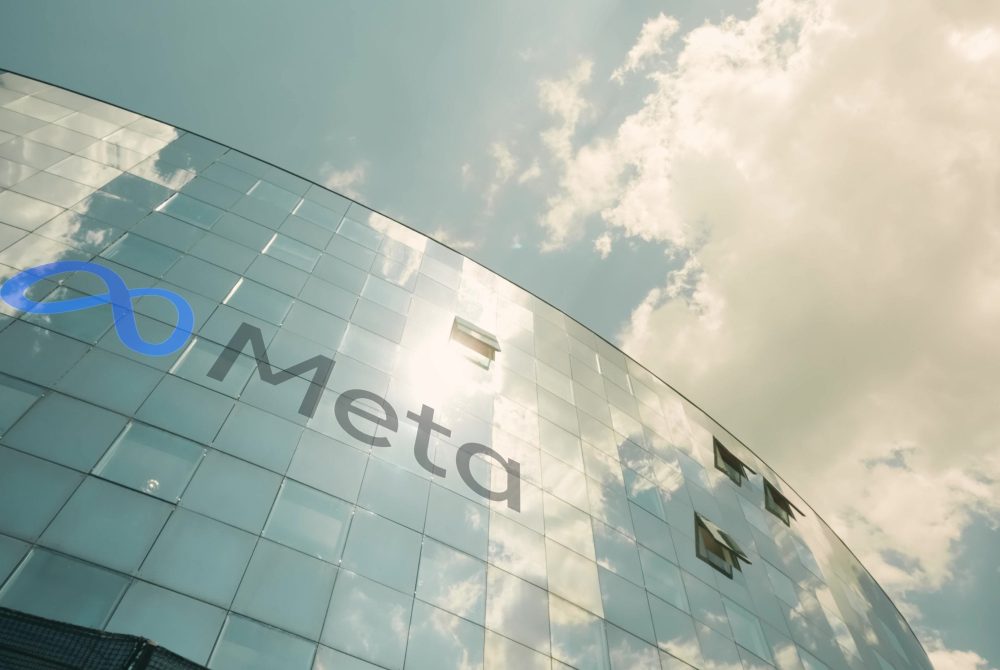
The social media reckoning is here. Courts have delivered consequential rulings against social media giants for the mental health harms they’ve caused young people, among other complaints. Major settlement dollars have also started to come through. Most recently, attorneys general for 47 states, the District of Columbia and U.S. territories reached a settlement worth up to $17.1 billion with Meta, which owns Facebook and Instagram. This comes on the heels of other lawsuits against social media companies — and more on the way.
Elizabeth Gaines has been preparing for this moment for a while. Gaines is the cofounder and CEO of the Children’s Funding Project, which works with communities to identify and develop funding sources for children and youth. The organization’s funders comprise a host of major philanthropies in the child welfare space — including legacy funder heavyweights like RWJF and Kellogg as well as billionaire-backed outfits like Ballmer Group and MacKenzie Scott’s Yield Giving.
When the first of the recent batch of lawsuits against Meta and other social media platforms were introduced, it seemed obvious to Gaines that settlement dollars should benefit young people who have effectively served as laboratory animals for the social media platforms that have increasingly dominated online life. She believed the funds should go to support positive youth development, including afterschool and summer programs.
As she told IP last year, “All that stuff started coming out, the whistleblowers talking about how the companies were intentionally hiring behavioral scientists and making the platforms as addictive as possible, and targeting our young people. I thought, it seems like a reckoning is coming, and we should be doing something about it. But back then, I’d bring it up at a cocktail party and people would look at me like I had eight heads.”
Still, Gaines was sure she was onto something — and as the social media lawsuits approached their day in court, others joined her. In late 2024, in partnership with the Afterschool Alliance, the Children’s Funding Project launched Fund IRL. The nonprofit coalition’s mission: to “ensure any payouts from current social media lawsuits help fund programs and services that promote youth wellbeing and healthy development.” Fund IRL, whose name refers to internet slang for “in real life,” now has over 70 partner organizations; it is backed by funders including the Overdeck Family Foundation, Wallace Foundation, Ralph C. Wilson Jr. Foundation, Eli and Edythe Broad Foundation, Annie E. Casey Foundation, Hopelab, and Hellman Foundation.
For Gaines, the equation is a simple one. “If we can get this right, this is just the beginning,” she said. “We know that technology is going to be a part of our lives going forward. We’re not anti-technology, but we are here to make sure that when young people are harmed, there are consequences and there’s accountability. And one of the best ways that that accountability can happen is by reinvesting back in young people and getting the companies to change their practices. And one way to get them to change their practices is to hit their pocketbooks.”
“We’re going to be a dog on a bone” tracking settlement dollars
One reason Gaines is concerned about getting social media settlement distributions right is rooted in her own experience with legal settlements for another addictive industry. In 1998, the country’s largest tobacco companies agreed to pay billions of dollars to settle lawsuits brought against them because of smoking’s devastating health impacts. As an advocate in Missouri, Gaines worked to get the settlement funds directed to child and youth development programs. But the funds were ultimately diverted to fill a state budget hole instead. In other states, too, some of the settlement funds were channeled to priorities that didn’t include public health or tobacco prevention. In some cases, the money was used for road repair, for example, and even to support tobacco farmers, as NPR reported in 2013.
There’s another more recent parallel. When it comes to the money flowing from opioid settlements, philanthropy-backed advocates have been working to ensure that funds go to support prevention and treatment. But a recent New Yorker report found that in many places, it is going to support law enforcement and other priorities.
Gaines and Fund IRL will be following closely as social media settlement funds are disbursed in states around the country. “We’re going to be a dog on a bone tracking every one of those dollars, making sure they get back to young people,” she said. “We have a two-tier approach. We’ve tried to influence the national settlement strategy, and all the while, we’ve been building advocates to take the lead in their own states. We have 50 state Fund IRL coordinators who are working their butts off to make sure that the money doesn’t get flitted away into the general fund or for things that aren’t going to help young people engage in real life.” Depending on the state, the funds will be distributed by either the office of the state attorney general or the state legislature.
Fund IRL has developed a set of guiding principles for the use of the social media settlement funds. The guidance was completed even before the settlements. “We got [the guidance] into the hands of some of the AGs before they went to settle, so you’ll see some of this reflected in the settlement language itself,” Gaines said. “Every state is different, so it’s important to look at the needs in a given state and drive some of the dollars to those needs. We’re going to keep encouraging that and tracking that.”
What young people want, what funders can do
Given Democrats’ major victories in the recent midterms and the upcoming power shift in Washington and in state capitals around the country, oversight of social media companies and their impact is likely to increase at both the federal and state levels.
Meanwhile, since Fund IRL was launched, the number of member organizations has grown steadily. The coalition includes a diverse group of members concerned with the overlapping issues of positive youth development, mental health, and overall social wellbeing.
Gaines welcomes more organizations to sign up — and hopes more funders will, too. In recent years, a number of funders have stepped up for youth mental health with a specific focus on the impact of social media and technology. Melinda French Gates’ Pivotal, Susan Crown Exchange and the Goodness Web, for example, have all backed Young Futures, which aims to make it easier to grow up in the digital age. Pivotal and Susan Crown Exchange also helped launch the Center for Digital Thriving at Harvard University, and Mindful Philanthropy has made youth mental health a priority, along with many of the funders in its network.
Gaines would love to see funder support for a national evaluation to track distribution of the settlement dollars. “As these dollars roll out, with the potential for more to come through from other companies, we need to know where the money goes, who benefits, and whether those investments are actually improving young people’s lives,” she said. “Both a repository for evidence-based approaches and a subsequent national evaluation would help us guide and then track how states distribute these resources, and identify promising and effective approaches. Philanthropy has a critical opportunity to support that independent oversight and learning so we don’t repeat the mistakes of past settlements, when too much funding was diverted from its intended purpose.”
The social media settlement dollars represent a rare opportunity — and the resources — to respond to what young people say they want and need. Gaines cites a report by the Crisis Text Line, which analyzed more than 87,000 conversations with young people in crisis. In those conversations, young people said their communities could help by providing access to the following: opportunities for social connection; engagement in music, writing, visual and performing arts; mental health services; exercise and sports programs; books and audiobooks; and outdoor spaces and nature.
“Young people are asking for the stuff that is in our guidance document,” she said. “This is a real moment of accountability and a real moment of opportunity for our field to do things differently than we have been doing. We’ve worked in a scarcity mindset, and we’ve stopped thinking about what it is that young people themselves need and are calling for. It’s a no-brainer. What young people want and need are plentiful opportunities to engage with the world.” In real life.
