• Skip to main content
  • Skip to secondary menu
  • Skip to primary sidebar
  • Skip to footer
Inside Philanthropy

Inside Philanthropy

Go beyond 990s.

Facebook LinkedIn X
  • Grant Finder
  • For Donors
  • Learn
    • Explainers
    • State of American Philanthropy
  • Articles
    • Arts and Culture
    • Civic
    • Economy
    • Education
    • Environment
    • Global
    • Health
    • Science
    • Social Justice
  • Places
  • Jobs
  • Search Our Site

“We Had Big Plans.” Amid Controversy, a Chastised Donor Revokes a Major Campus Gift

Mike Scutari | October 30, 2019

Share on Facebook Share on LinkedIn Share on X Share via Email
Banner for article “We Had Big Plans.” Amid Controversy
fasthorses/shutterstock

News out of Oxford, Mississippi, provides a striking example of a decades-long partnership between a donor and a university that instantly evaporated thanks to a Facebook post and the lengths to which a “disgraced” donor is willing to go to claw back his gift in a highly charged higher ed fundraising landscape.

Ed Meek led the University of Mississippi’s public relations department for 37 years, and also worked in the publishing business. Meek, wrote Mississippi Today’s Adam Ganucheau, “preached to anyone who would listen the value of teaching digital skills so students could thrive in a changing industry.” Meek also started the local news website HottyToddy.com. In 2009, he gave Ole Miss’ journalism school a $5.3 million gift—a huge amount for a regional public university. The university renamed the school the Meek School of Journalism in recognition of the gift.

In September of 2018, Meek made a post on his personal Facebook page regarding late-night activity in Oxford after an Ole Miss-Alabama football game. Meek took umbrage at the lack of police presence and lamented about “all the pictures last night, the fights and scenes.” Meek then addressed local leaders, saying, “Enough, Oxford and Ole Miss leaders, get on top of this before it’s too late.” The post also included two photos of African-American women wearing short dresses.

The school called the post “highly offensive” and cited its “unjustified racial overtone.” After deleting the post, Meeks posted a public apology, saying, “I apologize to those offended by my post. My intent was to point out that we have a problem in The Grove and on the Oxford Square.” An Ole Miss student launched a Change.org petition to have Meek’s name removed from the journalism school. (Click here for the timeline regarding the university’s response to Meek’s initial post.)

Faced with mounting pressure from faculty, Meek asked university officials to remove his name from the journalism school. Meek also released a statement via the school apologizing for the post and to the women depicted in the photograph. Trustees of the state college board approved the request to remove his name from the school within weeks.

“Impracticable or Impossible to Achieve”

Previous coverage looking at toxic higher ed donors has focused on the fact that many universities haven’t had the proper governance mechanisms in place to revoke an honorary degree from a tainted individual, for example. Robert O’Neil, a former president of the University of Virginia, said that the proliferation of these “eclectic or haphazard” processes at institutions creates a “very bad precedent.”

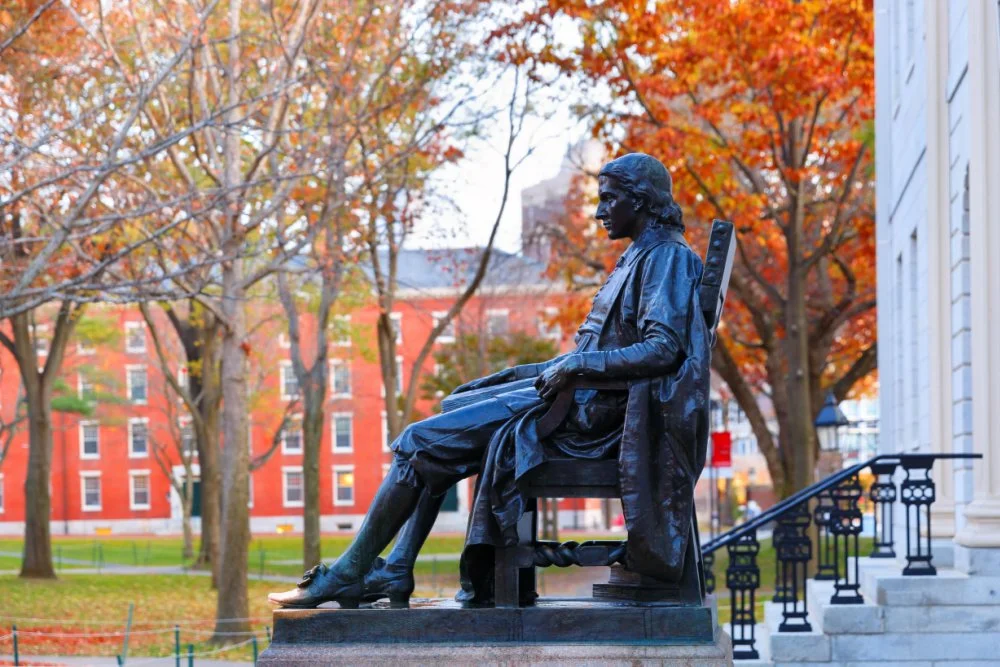
Similarly, Harvard alumni, parents, students and faculty likely recoiled in horror when university President Lawrence S. Bacow recently said that he considers it “inappropriate” for the school to remove the Sackler family name from campus buildings.

While each case is unique, they all underscore the fact that removing a donor’s name from a building can be an arbitrary and complex process. In the case of Meek, Ole Miss Chancellor Jeff Vitter, in an open letter to the university community, outlined the official governance steps the university would undertake to strip Meek’s name. The faculty’s recommendation would proceed to the university’s undergraduate and graduate councils. Then a group consisting of university stakeholders would have to approve the recommendation. Finally, Vitter would make the final decision on whether to ask the state college board for permission to rename the building.

But the complexity doesn’t end there. To wit: What happens to Meek’s 2009 $5.3 million donation, which, thanks to interest, has ballooned to $6.4 million? This is where things get really interesting. Normally, individuals within the university community call on the school to return the tainted donor’s gift, while others would argue it’s best to keep the money and put it to good use. Things unfolded a bit differently at Ole Miss.

The Daily Mississippian’s Neal wrote that Meek had kept a low profile in the six months after the controversy first broke. Five months later, Meek emerged from self-imposed exile when he pulled his $5.3 million Ole Miss donation, plus interest, and redirected it to the CREATE Foundation, a Mississippi community and journalism nonprofit.

Documents filed in Lafayette County Chancery Court include this statement from Meek: “As a consequence of a long series of events, it is now impossible for the gift to be used as once intended, and my wife and I now desire that the gift be redirected as contemplated in the original letter describing the gift.” On July 30, an order and judgement was filed to the Chancery Court, granting the transfer of funds. The order stated, “the Court finds that the particular charitable purpose or a restriction contained in the original Gift instrument has become impracticable or impossible to achieve.”

Meek said some of the funds have already gone to scholarship opportunities for students, and he plans to donate his estate to the foundation and establish the Ed and Becky Meek Foundation. “This money is in a donor-advised fund,” Meek said. “There are several hundred of those at CREATE. You have the opportunity to advise where the money goes, but it ultimately is the directors’ responsibility to distribute the fund of what is allowed.”

A Cautionary Tale—But with a Twist

The list of higher ed funders that have sought to claw back their donations in recent years is long and growing. It includes the Pearson Family Members Foundation, the Engelstad Family Foundation, real estate executive Hugh Culverhouse Jr., and California-based lawyer Roger Lindmark.

In each of these examples, funders concluded that the recipient university failed to allocate the money in accordance with their wishes. This suggests that today’s big givers are more likely than in the past to keep close tabs on things to ensure that their money is well spent. Often, too, they want to be actively involved in helping big, new initiatives succeed, tapping their own skills and networks to move the ball forward.

But the Meek case study differs from these examples in one huge way: Meek himself was accused of impropriety and racial insensitivity. “Toxic donors”—an admittedly broad term—can encompass anyone from Bill Cosby to Robert W. Garthwait Jr., who resigned as a trustee at Gettysburg College after a student discovered a 39-year-old photo of him dressed as a German soldier. Such donors typically apologize for their misdeeds, accept their admonishment, and quietly fade into the background, leaving university administrators to decide what to do with the money.

Meek, however, petitioned to take back his donation, and the Lafayette County Chancery Court obliged. Consequently, the Ole Miss controversy serves as a cautionary tale in a somewhat unexpected way. Not only do fundraisers have to add clauses that anticipate PR flare-ups and clearly specify how the money is spent lest they incur the donor’s wrath, they must also prepare for a scenario in which a donor pulls the money if he feels he’s been insufficiently defended in the court of public opinion.

Speaking to the Daily Journal after announcing he’d be transferring his millions to the CREATE Foundation, Meek said, “I’m disappointed. I love Ole Miss. We had major plans for the university. I’m disappointed in the way the school treated me—very unfairly, I think. But I love the university.”

Featured

What the Collapse of a Major HBCU Donation Tells Us About Structural Inequities in Philanthropy

What the Collapse of a Major HBCU Donation Tells Us About Structural Inequities in Philanthropy

Mellon Gives Another Boost to the Humanities in Higher Ed Amid Waning Student Interest

Mellon Gives Another Boost to the Humanities in Higher Ed Amid Waning Student Interest

From CZI to Carnegie: A Leader in Education Philanthropy Talks About Her New Role

From CZI to Carnegie: A Leader in Education Philanthropy Talks About Her New Role

Behind a Latina Donor's Big Gift for Critical Race Studies at UCLA

Behind a Latina Donor’s Big Gift for Critical Race Studies at UCLA

A Look at the Trellis Foundation’s Work to Reduce Barriers to Success for College Students

A Look at the Trellis Foundation’s Work to Reduce Barriers to Success for College Students

Universities Raised a Staggering Amount of Money Last Fiscal Year, Despite a Tepid Stock Market

Universities Raised a Staggering Amount of Money Last Fiscal Year, Despite a Tepid Stock Market

A Huge Gift to Cut Medical School Tuition Looks to Make a Dent in a Deep Systemic Problem

A Huge Gift to Cut Medical School Tuition Looks to Make a Dent in a Deep Systemic Problem

This Higher Ed Funder Recognized the Growing Crisis of Student Mental Health Over Ten Years Ago

This Higher Ed Funder Recognized the Growing Crisis of Student Mental Health Over Ten Years Ago

A Family Foundation’s Refreshingly Accessible Approach to Funding Research and Education

A Family Foundation’s Refreshingly Accessible Approach to Funding Research and Education

The Dollar Amounts Are Historic, But Here’s Why We’re Really Bullish About Two Recent HBCU Gifts

The Dollar Amounts Are Historic, But Here’s Why We’re Really Bullish About Two Recent HBCU Gifts

Culture Wars On Campus Are Raging, and Megadonors Are Key Figures on the Battlefield

Culture Wars On Campus Are Raging, and Megadonors Are Key Figures on the Battlefield

Ed Donors Take Note: Scholarships Have to Amount to More Than Just Feel-Good Stories

Ed Donors Take Note: Scholarships Have to Amount to More Than Just Feel-Good Stories

After a Trailblazing Career in Tech, a Donor Couple Boosts Black History, Higher Ed and More

After a Trailblazing Career in Tech, a Donor Couple Boosts Black History, Higher Ed and More

A Look Back at the Giving of Charlie Munger, Warren Buffett's Right-Hand Man

A Look Back at the Giving of Charlie Munger, Warren Buffett’s Right-Hand Man

A Closer Look at the Philanthropy of First Wave Tech Billionaire John Morgridge and His Family

A Closer Look at the Philanthropy of First Wave Tech Billionaire John Morgridge and His Family

What Does the Billionaire Donor Revolt at Ivy League Schools Mean for Higher Ed Philanthropy?

What Does the Billionaire Donor Revolt at Ivy League Schools Mean for Higher Ed Philanthropy?

Big Giving, Low Profile: Digging into the Philanthropy of the Billionaire Chan Family

Big Giving, Low Profile: Digging into the Philanthropy of the Billionaire Chan Family

Why This Major Antipoverty Funder Is Ramping Up Its Investment in HBCUs

Why This Major Antipoverty Funder Is Ramping Up Its Investment in HBCUs

“A More Even Playing Field.” How Would the End of Legacy Admissions Impact Alumni Giving?

“A More Even Playing Field.” How Would the End of Legacy Admissions Impact Alumni Giving?

The Wealthy Donors Behind the Assault on Affirmative Action

The Wealthy Donors Behind the Assault on Affirmative Action

HBCU Moves: Seven Questions for Mildred Whittier, Spelman College Alumna and Fundraiser

HBCU Moves: Seven Questions for Mildred Whittier, Spelman College Alumna and Fundraiser

Don't Leave Home Without It: A Quick Look at Ken Chenault's Philanthropy

Don’t Leave Home Without It: A Quick Look at Ken Chenault’s Philanthropy

Nine Ways Funders Can Increase Diversity in Higher Ed in a World Without Affirmative Action

Nine Ways Funders Can Increase Diversity in Higher Ed in a World Without Affirmative Action

Who Are the Top Black Donors to HBCUs?

Who Are the Top Black Donors to HBCUs?

Charles Barkley Made a Big Commitment to Diversity in Higher Ed. What Drives His Giving?

Charles Barkley Made a Big Commitment to Diversity in Higher Ed. What Drives His Giving?

This Billionaire Heiress and Her Husband Have a Huge Philanthropic Footprint in Their Hometown

This Billionaire Heiress and Her Husband Have a Huge Philanthropic Footprint in Their Hometown

A Philanthropic Push to Diversify the Ranks of Researchers in Economics and Other Social Sciences

A Philanthropic Push to Diversify the Ranks of Researchers in Economics and Other Social Sciences

This Megadonor Couple’s Latest Gift to a Favored University Follows Past Criticism

This Megadonor Couple’s Latest Gift to a Favored University Follows Past Criticism

Eight Questions for Jacob Fraire, President of ECMC Foundation

Eight Questions for Jacob Fraire, President of ECMC Foundation

Philanthropy Contributes to “Wealth Stratification” in Higher Ed. Can it Help Close the Gap?

Philanthropy Contributes to “Wealth Stratification” in Higher Ed. Can it Help Close the Gap?

Enable JavaScript to continue

This site uses JavaScript to verify your account, display articles, and provide other features. Please enable JavaScript or allow scripts for Inside Philanthropy, then reload the page.

Chrome: Open Chrome Settings, then go to Privacy and security > Site settings > JavaScript, and select “Sites can use JavaScript.”
Full Chrome instructions

Safari: Open Safari Settings, then check the Security settings for JavaScript. Make sure JavaScript is enabled, then reload this page.
Full Safari instructions

Edge: Open Edge Settings, then go to Cookies and site permissions > JavaScript, and make sure JavaScript is allowed.
Full Edge instructions

Brave: Click the Brave Shields lion icon in the address bar and allow scripts for this site. If scripts are blocked, article access and account verification may not work.
Full Brave Shields instructions

Return to the home page

Filed Under: IP Articles Tagged With: American Online Giving Foundation, ECMC Foundation, Education, Front Page - More Article, Front Page Most Recent, FrontPageMore, Higher Education, Mellon Foundation

Primary Sidebar

Find A Grant Square Banner

Receive our newsletter

Donor Advisory Center Banner

Philanthropy Jobs

Check out our Philanthropy Jobs Center or click a job listing for more information.

Girl in a jacket

Footer

Inside Philanthropy Logo
  • LinkedIn
  • X
  • Facebook

Quick Links


About Us
Advertising
Contact Us
FAQ
Help
Terms of Use
Privacy Policy
Accessibility

Become a Subscriber

Sign up for a single user or multi-user subscription.

Receive our Newsletter

© 2026 - Inside Philanthropy