


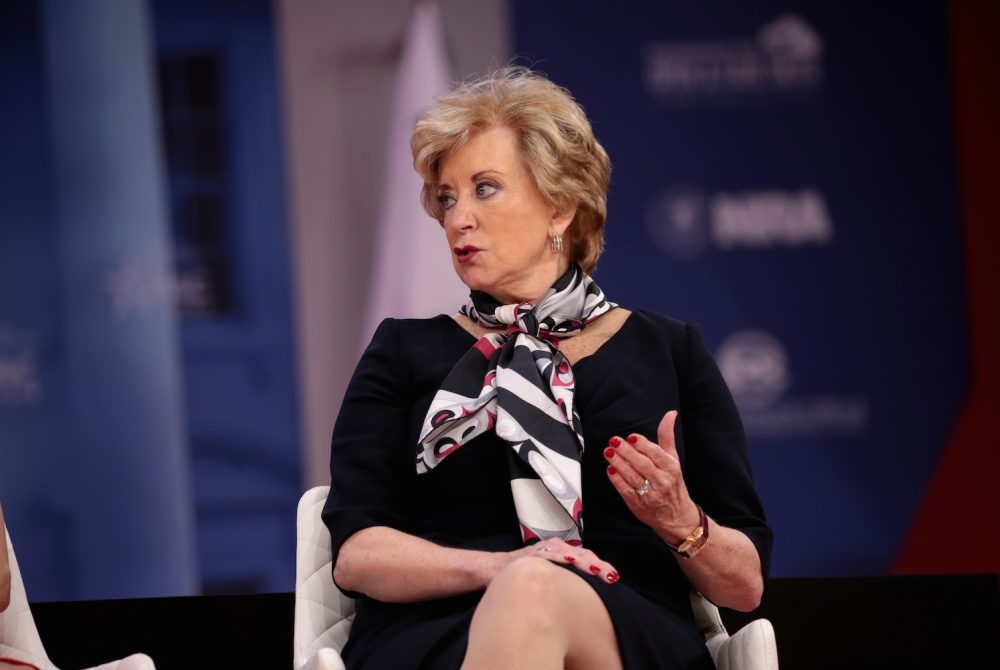
What kind of education president will Donald Trump be the second time around? It’s all speculation until he takes office, of course. Still, Trump’s ed secretary nominee, policies during his first term, remarks during the campaign, the 2024 Republican platform, and education reforms championed by his allies — including the creators of Project 2025 — offer a sketch of what to expect in a Trump administration 2.0.
It is also too early to say how education philanthropy leaders will position themselves during a second Trump presidency. Earlier this year, IP explored some of the ongoing shifts and cutbacks in education philanthropy, trends that have created disruption for many nonprofits working to strengthen public education. We found that many funders are confused about if and how they can make a difference in the complicated education landscape, and some are shifting their focus to address other causes.
But given the many ways that a second Trump presidency could impact American education, it’s more urgent than ever that philanthropy step up to protect public schools and vulnerable students. Here’s an early look at some of what’s in store and how it might affect the ed giving landscape, which IP will be tracking as the new administration takes the reins next year.
A new Secretary of Education
As with many of Trump’s other cabinet nominees, experience apparently wasn’t a priority when he chose Linda McMahon to lead the Department of Education. As the New York Times tactfully put it, “President-elect Donald J. Trump’s pick for education secretary has a slimmer educational résumé than has been typical of candidates for the position.”
Miguel Cardona, the current education secretary, worked as a teacher, school principal, assistant superintendent, and commissioner of education in Connecticut before he took the top education post. In contrast, McMahon is qualified to teach French, was a trustee at a Connecticut Catholic school, and served briefly on the Connecticut Board of Education, but never spent time in a classroom. When she ran, unsuccessfully, for a Senate seat in Connecticut, she claimed to have an education degree; this turned out to be untrue. The former chief executive of World Wrestling Entertainment, McMahon headed the Small Business Administration during Trump’s first term. A co-chair of the Trump-Vance transition team, McMahon is a friend of the former president, and one of the many billionaire donors who backed his campaign.
Probably the best predictor of McMahon’s approach as ed secretary can be found by looking at the agenda of the America First Policy Institute, the conservative think tank she currently heads. Like the Heritage Foundation, AFPI developed a plan for a second Trump presidency, but, as the New York Times reported, the organization kept its agenda on the down-low after blowback to Heritage’s Project 2025 led the Trump campaign to denounce it. (Trump has already nominated a number of those who helped create the plan to serve in his administration.)
AFPI, which some have dubbed “The White House in Waiting,” has many links to the soon-to-be President Trump as well. Pam Bondi, Trump’s Department of Justice nominee, heads the organization’s Center for Litigation, and Chad Wolf, AFPI’s executive director, served in the first Trump administration. Kellyanne Conway chairs the group’s Center for the American Child. Several other high-level nominees have worked at the organization, as well.
AFPI’s proposed education reforms promote education budget cuts and school choice, policies Trump also backs (see below). The organization and McMahon herself support the expansion of apprenticeships and career technical education as an alternative to college for some students. This is an approach that has gained recent support from funders including Bloomberg Philanthropies, Walton Family Foundation and others, as well as the Biden administration.
Many observers are concerned that McMahon will reverse Department of Education Title IX protections for LGBTQ students and survivors of sexual discrimination and sexual misconduct. Trump’s former ed secretary, Betsy Devos, limited Title IX protections but the Biden administration issued new guidelines to strengthen those protections again.
As secretary of education, Linda McMahon will be responsible for the education of children, but a recent lawsuit raises serious questions about her willingness to protect them. The suit alleges that McMahon and her husband, Vince, turned a blind eye to flagrant sexual abuse of children who worked at WWE.
Abolish the Department of Education and slash ed budget
Education wasn’t an issue either candidate talked about a lot during the recent presidential campaign, but when Trump did address it, he vowed to scrap the Department of Education and return education oversight to the states. It’s a goal he touted during his first presidency, and one cherished by conservatives since President Jimmy Carter created the DOE in 1979. For the GOP, the department has become a symbol of bloated government and bureaucratic overreach; conservatives also blame the DOE for so-called “woke” education policies they deplore.
Shuttering the Department of Education is a goal that featured prominently in the GOP platform this year. And a number of Trump allies, including the team that crafted the Heritage Foundation’s Project 2025, and “First Buddy” and billionaire Elon Musk, are pushing it, too. When Trump announced Linda McMahon for the education secretary post, he posted, “We will send Education BACK TO THE STATES, and Linda will spearhead that effort.” But scrapping the DOE would require congressional approval and it has never succeeded in the past; observers consider it unlikely today, even with GOP majorities in both houses. Still, a second Trump administration could slice away at DOE programs and shrink spending for education.
In short, it won’t take the actual elimination of the Department of Education for Trump policies to have a profound impact on the flow of federal resources for education — and on ed philanthropy. AFPI has called for reduced federal oversight of education and unspecified cuts in education funding. On the campaign trail, Trump vowed to slash education spending in half. Project 2025 has proposed abolishing the Department of Education, phasing out Title 1 programs altogether, and eliminating Head Start; these measures would fall hardest on already under-resourced students and communities. The Department of Education also provides protections for students with disabilities; education experts disagree about how Trump’s plans would impact those students, as Chalkbeat reported recently.
In any case, such cuts would be devastating for already cash-strapped public schools and make little sense, given evidence that COVID relief funds led to improved student outcomes (those funds were rolled back this fall).
Depending on how far the Trump administration goes with its education cuts, this is an area where philanthropy could make a big difference. Many funders already make education equity a priority, including Ballmer Group, Bloomberg Philanthropies, Dalio Education, Gates Foundation, William and Flora Hewlett Foundation, W.K. Kellogg Foundation, Lozier Foundation, Nellie Mae Education Foundation, Raikes Foundation, Charles and Lynn Schusterman Family Philanthropies, MacKenzie Scott, Schott Foundation for Public Education, Spencer Foundation, Pivotal Ventures and others; that work will be more important than ever in the months and years ahead.
School “choice”
This education funding model will almost certainly enjoy pride of place in a second Trump administration. Given the charter movement’s high degree of support from many corners of ed philanthropy over the past few decades — and from billionaires in particular — one might expect this to be an area where private funders and Trump align. However, as IP explored last year, philanthropic funding for charters appears to have lost momentum amid questions about the track records of charter schools.
Meanwhile, conservative school “choice” advocates have broadened their list of fixes far beyond charters alone. Trump has advocated so-called “universal school choice,” an umbrella term that includes charter schools, as well as measures that permit parents to use public funds to send children to private schools (or to home school, in some cases) with education vouchers, education savings accounts and tax credit scholarships. Over half the states now have at least one private school choice program, according to Education Week. Linda McMahon’s AFPI advocates “supported and expanded school choice so that every family has the funds to send their children to the school that fits their needs.”
In fact, vouchers seem to have replaced charters at the top of conservative ed funders’ education wish list. Last year, IP reported on the many right-wing funders that support education vouchers and voucher-like programs, which allow families to receive public education dollars for private school tuition, tutoring and homeschooling. Such funders include Betsy Devos, the Lynde and Harry Bradley Foundation, Charles Koch-affiliated organizations, and many donors who contribute anonymously to conservative DAFs, like DonorsTrust and the National Christian Charitable Foundation.
But despite conservative backing, school vouchers don’t appear to have widespread public support. Voucher schemes fared badly at the polls during the recent election. “Expansions of school vouchers, despite backing from wealthy conservatives, have never won when put to voters,” according to a recent ProPublica report. “Instead, they lose by margins not often seen in such a polarized country.”
This unpopularity is due in part to growing evidence that universal voucher programs primarily benefit affluent families, while whittling away at state education budgets. According to an investigation by the Indy Star, for example, Indiana’s voucher program funneled $600 million from the state’s education budget this year; in most cases, those funds went to families whose children were already attending private school. In addition, many rural lawmakers and their constituents oppose school vouchers because there are few private schools in rural areas.
According to education expert Josh Cowen, a professor at Michigan State University and the author of “The Privateers: How Billionaires Created a Culture War and Sold School Vouchers,” research shows poor academic outcomes for voucher school students. “We’re talking about academic losses [for students in voucher programs] about as large as the pandemic’s effect on test scores — I mean, really, really, really bad,” he told IP last year. “I don’t know of another human-made program that has had such negative impacts on student test scores as school vouchers. Hurricane Katrina did and the pandemic did, but those are natural disasters.”
Still, observers agree that a second Trump term is good news for the school choice movement. With an administration that is all-in and Republicans dominating Congress, we’re likely to see school choice advanced at the national level. For instance, many GOP lawmakers favor a voucher-inspired scheme that would give tax credits to individuals or businesses who donate to private-school scholarship funds. A bill creating the program, which the Institute on Taxation and Economic Policy calls a “voucher boondoggle,” passed the Ways and Means Committee in the House earlier this year.
Meanwhile, for education philanthropies that support public schools and the many students who rely on them, opposing voucher programs is a good place to start.
Related Inside Philanthropy Resources:
For Subscribers Only
Inflaming school culture wars
Under a second Trump administration, we can expect to see more restrictions on how history is taught, what books are allowed in libraries, and on rights for gender nonconforming students. During his campaign, Trump also vowed to bring back prayer in schools.
According to the Trump-Vance campaign website, “President Trump will cut federal funding for any school pushing critical race theory, transgender insanity, and other inappropriate racial, sexual or political content on our children — and he will pursue civil rights investigations into any school that engages in race-based discrimination. President Trump will get the left’s ‘equity’ agenda out of our classrooms — and he will get excellence back IN to our classrooms.”
During his campaign, Trump vowed to bring back the 1776 Commission, which he created during his first presidency to promote what he called “patriotic education.” The Commission’s report, released in January, 2021, just as Trump was leaving office, was met with searing criticism from historians, as the Washington Post reported.
Linda McMahon’s America First Policy Institute also recommends reinstatement of the 1776 Commission “to promote patriotic civics education.”
To date, a small number of philanthropies have stood up to culture-war-inspired attacks on educators and public schools. For instance, funders have supported efforts to prevent book bans and to protect libraries and librarians. Seven foundations teamed up to form the Education Future Fund, which supports organizations and grassroots groups working for education and racial equity and against attempts to restrict how history is taught, limits on rights for gender-nonconforming students, and book bans. Efforts like this could use more philanthropic support, and the Education Future Fund welcomes new partners: “The future of public education and those it serves is at stake. Please consider joining us.”
Harm to vulnerable students
Many proposals Trump raised on the campaign trail pose a danger to the most vulnerable students in the U.S. The quality of education for low-income students will be undermined if funds for high-poverty schools are phased out and Head Start is eliminated, as Project 2025 has proposed. Cuts to the Department of Education proposed by candidate Trump may also undermine protections for students with disabilities.
Immigrant students now face the threat that they themselves or their parents and other loved ones will be rounded up and jailed or deported. At the Moms for Liberty conference in September, Trump warned that immigrant students bring gangs and disease to school “and are welcomed warmly while current students are shut out,” according to The Hechinger Report. “They don’t even speak English.”
Rhetoric like this and deportation threats from Trump and his allies have created terror in immigrant communities around the country, and it’s showing up in many classrooms. “Today’s been so hard with the kids,” one San Francisco teacher told the San Francisco Standard shortly after the election. “So many of my students [are] in tears thinking they’re going to get deported.”
A number of major funders are already supporting immigrant students and families, as my colleague Martha Ramirez has reported, and we expect additional funding in that space into 2025. Meanwhile, the Mellon Foundation is countering dangerous portrayals of communities along the U.S.-Mexican border.
At greatest risk
LGBTQ+ students, especially trans kids and the adults supporting them, are a particular target, as the Trump-Vance campaign previewed in its many ads and speeches on the campaign trail.
This will be an area of concern going forward for philanthropies that are already supporting LGBTQ+ people, like those backing Grantmakers United for Trans Communities, the Trans Justice Funding Project, the Collective Futures Fund and others. The Helmsley Charitable Trust recently launched an effort to prevent suicide among LGBTQ+ youth in rural areas. But as IP’s Dawn Wolfe has reported, funding in this area effectively decreased in recent years — despite stepped-up attacks against LGBTQ+ communities.
It is instructive — and alarming — to read the Trump campaign’s feverish to-do list, titled “President Trump’s Plan to Protect Children From Left-Wing Gender Insanity,” which includes directing the Department of Education to inform states and school districts that if any teacher or school official suggests to a child that they could be trapped in the wrong body, they will be faced with severe consequences, including potential civil rights violations for sex discrimination and the elimination of federal funding. The administration also intends to ask Congress to pass legislation establishing that “The only genders recognized by the U.S. government are male and female — and they are assigned at birth.”
Linda McMahon and AFPI apparently hold similar views. An AFPI issue brief accused the Biden administration of “funneling children through a cruel school-to-clinic pipeline. This pipeline begins in K-12 classrooms with the sowing of gender confusion in the minds of malleable children.”
There is already evidence that anti-trans policies at the state level are harming trans young people. A recent report by the Trevor Project, published in the journal Nature Human Behavior, found a statistically significant increase in suicide attempts among trans and nonbinary youth in states that enacted laws restricting the rights of trans people. How will young people fare once such measures become national policy and Trump rolls back civil rights protections for trans youth, as he has vowed to do? Since the election, trans young people, fearful of what’s to come, have been calling crisis hotlines in large numbers.
Finally, all students are vulnerable to gun violence given the tremendous number of guns in the U.S. and their ready availability. To date, a second Trump administration doesn’t seem likely to do much about the epidemic of school shootings. During the campaign, when Trump was asked to explain his gun control policy to parents of school shooting victims, he offered his support for the Second Amendment, adding, “You wouldn’t be able to take away the guns, because people need that for security. They need it for entertainment, and for sport and other things — but they also, in many cases, need it for protection.”
Vice President-elect J.D. Vance has called school shootings “a fact of life” and urged schools to “harden,” or boost security.
Gun violence is an area that has received steady philanthropic attention from a handful of funders, but could use more, as this public health threat doesn’t appear to be going anywhere.
Waiting for what’s next
For now, ed funders are still absorbing the reality of a second Trump presidency and what it will mean. A handful of education philanthropies issued statements after the election, including the Schott Foundation for Public Education, which urged its fellow funders “to make grants on a greater scale and longer timeline and build the infrastructure to protect equity and opportunity at the local and state level.”
The Raikes Foundation said this: “We are aware that many of President-elect Trump’s policy positions do not align with our vision for the future. Our mission and values remain steadfast… Our commitment to building a thriving, multiracial democracy where all young people can prosper is more important than ever.”
Until Trump takes office, of course, it’s impossible to know what’s to come. But if he follows through on his vow that “promises made are promises kept,” one thing is certain: Ed funders will have a lot more work to do.
